
Now Reading: Nail Ridges Explained: What Vertical and Horizontal Lines on Your Nails Really Mean
-
01
Nail Ridges Explained: What Vertical and Horizontal Lines on Your Nails Really Mean
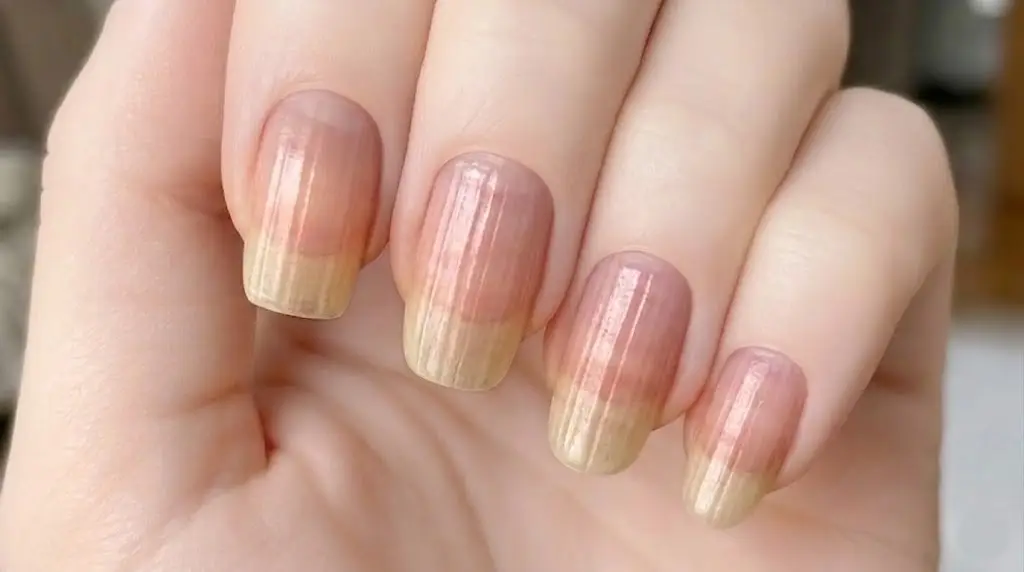
Nail Ridges Explained: What Vertical and Horizontal Lines on Your Nails Really Mean
Nail Ridges Explained: Vertical vs Horizontal and What They Mean
Quick Answer: Nail ridges are lines or grooves that run across or along your nail plate, and they are completely harmless most of the time. Vertical ridges that run from your cuticle to the tip are usually linked to aging or minor nutrient deficiencies. Horizontal ridges on nails running across the width of the nail are less common. These sometimes signal a past illness, injury, or a temporary disruption to nail growth. Neither type automatically means something is seriously wrong, but horizontal ridges are worth mentioning to a doctor if you cannot explain their cause.
You notice them while you are painting your nails, or maybe catching your hand in a certain light. Lines. Little ridges running up or across your nails, where everything used to be smooth. They cannot be unseen once you have spotted them, and it sends a lot of women straight to Google at odd hours, curious about exactly what their nails are trying to say. The worry is understandable. Nails speak about what’s going on inside your body, and watching them change, it is natural to want answers.
This is the reassuring truth: nail ridges are one of the most common nail concerns there, and most of the cases have a perfectly ordinary explanation. Here you will learn the actual causes of both vertical and horizontal nail ridges, how vitamin deficiency and thyroid connections actually look, what makes ridges worse over time, and how to get rid of ridges on nails or at least reduce how visible they are. By the end, you will know exactly whether your ridges need attention or they are just a good ridge-filling base coat.
In This Post
- Are Nail Ridges Normal?
- Vertical Ridges on Nails: What They Mean
- Horizontal Ridges on Nails: What They Mean
- Vertical Ridges on Nails and Vitamin Deficiency
- Ridges in Nails and Thyroid: What Is the Connection?
- How to Get Rid of Ridges on Nails
- Habits That Make Nail Ridges Worse
- When Your Nails Are Telling You Something More
Are Nail Ridges Normal?
Yes, nail ridges are completely normal for most people, most of the time. Most adults have some degree of ridging on their nails. Nail texture just becomes more noticeable with age, under certain lighting, or when nails are dry.
As fine lines on your skin, think of vertical nail ridges the same way. They are a natural part of how the body changes over time. They do not mean your health is failing, nor do they spread or hurt. Ridges are cosmetic rather than clinical for the majority of women who notice them,
Horizontal ridges are a slightly different story; we will get into that in detail shortly. But those also are not automatically a cause for alarm. Context matters enormously with nail changes. A single horizontal groove that appeared after you were seriously ill or injured six months ago tells a very different story from multiple deep grooves appearing across all your nails without any obvious explanation.
The short answer: vertical ridges are almost always benign. Horizontal ridges, most of the time, still have an ordinary explanation but deserve a bit more attention.
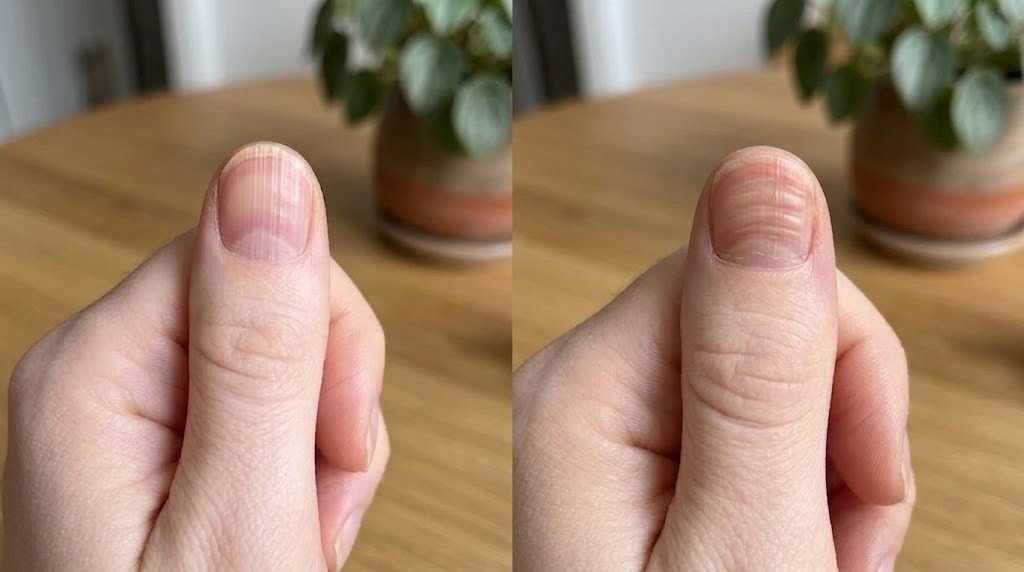
Vertical Ridges on Nails: What They Mean
Vertical nail ridges are the fine lines that run from the base of your nail right at the cuticle up to the free edge at the tip. Doctors sometimes call them longitudinal ridges or longitudinal striations. They show up on almost everyone eventually and are the most common type of nail ridge by far.
Where every new nail cell is created, they form inside the nail matrix, which is the tissue tucked just beneath the skin at the base of your nail. When cell production in the nail matrix becomes quite uneven, due to aging, nutrition, or external stress, the nail plate that grows forward reflects that unevenness as ridges on the surface.
Aging and Keratin Production
Aging is the single most common cause of vertical nail ridges. As you get older, keratin production naturally slows and becomes less consistent. Cell turnover across the body decreases, and the nail matrix is no exception. The nails become thinner or more brittle, growing slowly and developing that fine-lined texture on the surface, and most people start to notice this somewhere in their thirties or forties.
This is not a disease or deficiency. It is aging, the same process that brings fine lines to skin and a little roughness to hair. According to the American Academy of Dermatology, nails are expected to change with age and are usually harmless.
Vitamin and Mineral Deficiency
On vertical ridges appearing suddenly, or becoming noticeably more pronounced in a short period of time, nutrition is often worth examining. The nail matrix needs a steady supply of specific nutrients to produce smooth, naturally even nail cells. When nutrients run low, the nail plate quality suffers, and ridges become more visible as a result.
Iron deficiency is one of the most well-documented causes. When iron levels drop significantly, nails can develop ridges and sometimes take on a spoon-like concave shape called koilonychia. Protein deficiency can also disrupt keratin production directly, since keratin itself is a protein. Folic acid, vitamin B12, and vitamin A all play supporting roles in nail cell growth.
Thyroid-Related Ridges
Hypothyroidism can affect the nails in several ways, including causing or deepening vertical ridges. We cover this connection fully in its own section below because it comes up so often, and the details matter.
Eczema and Dry Skin Conditions
This one surprises many people. Chronic dry skin or conditions like eczema do not just affect the skin around the nails; they can also affect the nail plate itself. When the nail fold area is persistently dry or inflamed, it can disrupt the matrix just enough to create subtle longitudinal ridges over time.
Horizontal Ridges on Nails: What They Mean
Horizontal ridges on nails are entirely a different category, telling a different kind of story. These are grooves or indentations that run across the width of the nail, from one side to the other. They look almost like a dent or a speed bump built into the nail surface.
The medical term for these is Beau’s lines, named after the French physician Joseph Honoré Simon Beau, who first described them in the 1800s. The name has stuck because the pattern is so distinct and recognisable.
How Beau’s Lines Form
Beau’s lines are formed when nail growth is interrupted temporarily. The nail matrix pauses or slows production significantly, then resumes, leaving a visible groove in the nail plate, which grows forward over the following weeks and months until it eventually reaches the tip and grows off. A single Beau’s line on one nail after a local injury is rarely concerning. Multiple Beau’s lines appearing across several or all nails at the same time is more significant, because it suggests the disruption was systemic, something that affected the whole body at once.
Illness and High Fever
An illness that involves high fever is one of the most common causes of Beau’s lines. COVID-19, pneumonia, measles. Any severe acute illness can temporarily disrupt nail matrix activity. After a serious bout of COVID-19, many people noticed Beau’s lines appearing two to three months, which is roughly how long it takes for the nail to grow enough for the groove to become visible.
Physical Trauma or Injury
A single horizontal ridge on one nail after slamming a finger in a door or dropping something heavy on a toe is completely normal. The trauma disrupts local blood flow to the matrix temporarily, growth pauses, and a groove forms. It will grow out. Nothing to worry about.
Gel Manicures and Acrylic Nails
Prolonged use of artificial nail enhancements or aggressive removal processes can repeatedly stress the nail matrix enough to produce horizontal ridging over time. This is one reason taking breaks between gel manicures matters for genuine nail health, not just nail appearance.
Proper application and removal technique make the biggest difference here. Our beginner guide covers how to apply acrylic nails correctly for beginners without damaging the nail plate.
Medications and Chemotherapy
Certain medications, particularly chemotherapy drugs, are among the most common documented causes of Beau’s lines. A known side effect worth discussing with your oncologist is if you are undergoing treatment and notice horizontal ridges forming across multiple nails; this is worth noting, but not an emergency.
Zinc Deficiency and Horizontal Ridges
Zinc deficiency specifically has been linked to Beau’s lines as well as white spots on the nails. Ask your doctor for a simple blood panel if horizontal ridges appear alongside other signs of low zinc, slow wound healing, hair thinning, or frequent infections.
Vertical Ridges on Nails and Vitamin Deficiency
This section deserves its own space because it is the question behind one of the biggest keyword clusters in this topic, and because it is genuinely nuanced in a way most sites do not take the time to explain.
The relationship between nail ridge and vitamin deficiency is very specific. Not every nail ridge means you have a deficiency, and not every vitamin deficiency causes nail ridges.
Iron deficiency is the most strongly connected to vertical nail ridges. According to the National Institutes of Health, iron deficiency is one of the most common nutritional deficiencies worldwide and can affect nail health directly. The nail plate loses its natural, healthy lustre when iron levels are low, developing longitudinal ridges. In more pronounced cases, the nails may curve inward at the sides. This is koilonychia, or spoon nails, and it is a more advanced sign of iron deficiency.
Zinc deficiency is more commonly linked to horizontal ridges and white spots rather than vertical ridging. Zinc is worth checking if you have both types of nail changes alongside general low energy or poor immunity.
Vitamin B12 and folic acid deficiencies are associated with changes to nail colour and texture, contributing to ridge formation. B12 deficiency is particularly common in women who follow plant-based diets or have absorption issues.
Protein deficiency affects nail quality at the structural level because the protein that makes up the nail plate, keratin, cannot be produced properly without adequate dietary protein. Protein deficiency causes nails to become brittle, peel, and develop ridges.
What to do: if your vertical nail ridges appeared suddenly and you cannot attribute them to aging alone, a full blood panel from your doctor is the logical first step. Checking iron, ferritin, B12, folate, and zinc levels takes a single blood draw and can either confirm a deficiency or rule one out quickly.
Ridges in Nails and Thyroid: What Is the Connection?
An underactive thyroid dysfunction or hypothyroidism is one of the more commonly searched causes of nail ridges, and for good reason. The thyroid regulates how quickly cells regenerate. The nail matrix is one of the most metabolically active tissues in the body, so it responds noticeably when thyroid hormones are out of balance.
With hypothyroidism, nails typically become thicker, more brittle, and slower-growing. Vertical ridges often become more pronounced. The nails may also develop a dry, dull surface and break more easily than they used to. In some cases, the nail plate separates slightly from the nail bed. This condition is called onycholysis, which is more obviously concerning than ridges alone.
The important thing to understand: thyroid-related nail ridges almost never appear in isolation. They come alongside other hypothyroidism symptoms like persistent fatigue, unexplained weight gain, feeling cold all the time, dry skin and hair, constipation, or low mood. If you have ridged nails and none of those accompanying symptoms, thyroid disease is a much less likely explanation.
Hyperthyroidism can also affect nails, typically causing them to grow faster but become softer and more prone to separation at the nail bed.
A thyroid function test (TSH, T3, T4) from your doctor is the right next step if you have ridged nails plus a cluster of the symptoms above. It is one of the simplest blood tests there is, and it will either give you clarity or redirect you toward a more relevant explanation.
How to Get Rid of Ridges on Nails
Completely eliminating nail ridges is not always possible, especially if they are due to aging. But you can absolutely reduce their appearance, slow their progression, and support healthier nail growth going forward.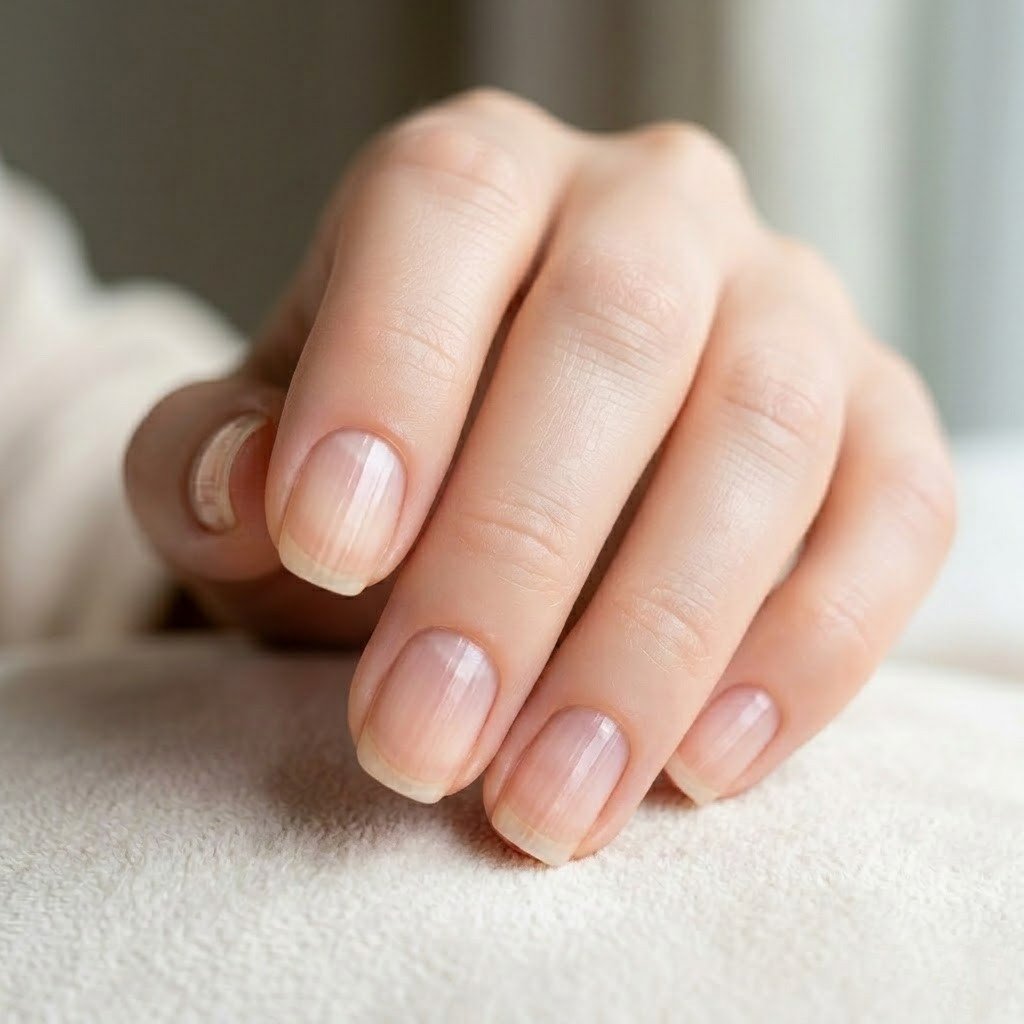
What actually works is:
- Address any underlying deficiency first. If the root cause is iron deficiency or B12 deficiency, no topical product will smooth your nails. If you suspect a nutritional gap, get blood work done, and correct it with dietary changes or supplementation under medical guidance. Because the nail plate grows slowly, nails typically take three to six months to show visible improvement after correcting a deficiency.
- Use a nail ridge filler as a base coat. This is the fastest cosmetic fix. Ridge fillers are thicker than regular base coats, designed to fill in the grooves on the nail surface before you apply colour or simply to smooth and protect bare nails. Look for formulas that also contain strengthening ingredients like hydrolysed keratin, calcium, or vitamins. Apply a thin layer to clean, dry nails and let it set properly before adding polish on top.
- Hydrate the nail plate and cuticles daily. Dehydration is one of the most underrated causes of visible ridging. When the nail plate loses moisture, existing ridges become more pronounced, and the surface looks rougher. Regularly massaging a cuticle oil or nail cream into the nail fold and nail plate, especially at night, makes a genuinely visible difference over time. Look for formulas containing jojoba oil, vitamin E, or squalane.
- Buff but gently and rarely. A fine-grit buffer can temporarily smooth the surface of ridged nails before applying ridge filler. The word “temporarily” matters. Over-buffing thins the nail plate, which makes ridges worse in the long run. A single light buff once every few weeks is enough. Never buff daily.
- Support your nail care routine with diet. A diet with adequate protein, leafy greens for folate, red meat or legumes for iron, and nuts and seeds for zinc covers most of the nutritional bases that nail health requires. Biotin supplementation is widely discussed for nail health, while evidence is mixed, it is generally safe for most people and may support keratin production.
The same nutritional foundations that reduce ridging also directly support how to make nails grow faster over time.
Building stronger nails from the foundation up starts with understanding what weakens them in the first place. Read our full guide on how to strengthen weak and brittle nails.
Habits That Make Nail Ridges Worse
This is the section most nail care posts skip. Knowing what not to do matters just as much as knowing the right steps, especially because several common nail habits actively deepen ridges over time.
- Over-buffing the nail surface. Filing away the visible ridges feels satisfying, but thins the nail plate significantly. A thin nail plate shows ridges more prominently, not less. Keep buffing at least once every few weeks with a fine-grit block, maximum.
- Using acetone remover too frequently. Nails that are repeatedly exposed to acetone become dehydrated as acetone strips moisture from nails, and dehydrated nails show ridges far more clearly. Switch to an acetone-free remover for everyday use and save acetone-based formulas for gel removal only, ideally with breaks in between.
- Skipping the base coat. Applying polish directly to the nail plate without a base coat means no ridge-filling layer, no protection, and direct contact between pigments and the nail surface. Always start with a ridge filler or a nourishing base coat.
- Pushing cuticles back aggressively. The cuticle exists to seal and protect the nail matrix. Cutting it away or pushing it back too hard repeatedly can cause minor trauma to the matrix, and a disrupted matrix produces uneven nail cells. Soften cuticles gently with oil rather than cutting or pushing them excessively.
- Ignoring hydration. Dry nail plates crack, peel, and ridge. If you wash your hands frequently or use hand sanitiser throughout the day and skip moisturising afterwards, chronic dehydration of the nail plate accumulates quietly. A thirty-second cuticle oil massage at night is one of the simplest habits you can build.
- Wearing gel or acrylics without breaks. Continuous wear without allowing the nail plate to recover compresses and stresses the matrix over time. Regular breaks allow the nails to breathe and recover their natural moisture balance.
When Your Nails Are Telling You Something More
Most nail ridges do not need medical attention. But some patterns are worth taking to a dermatologist or your doctor, not to cause alarm, but because nails genuinely can reflect internal changes before other symptoms appear.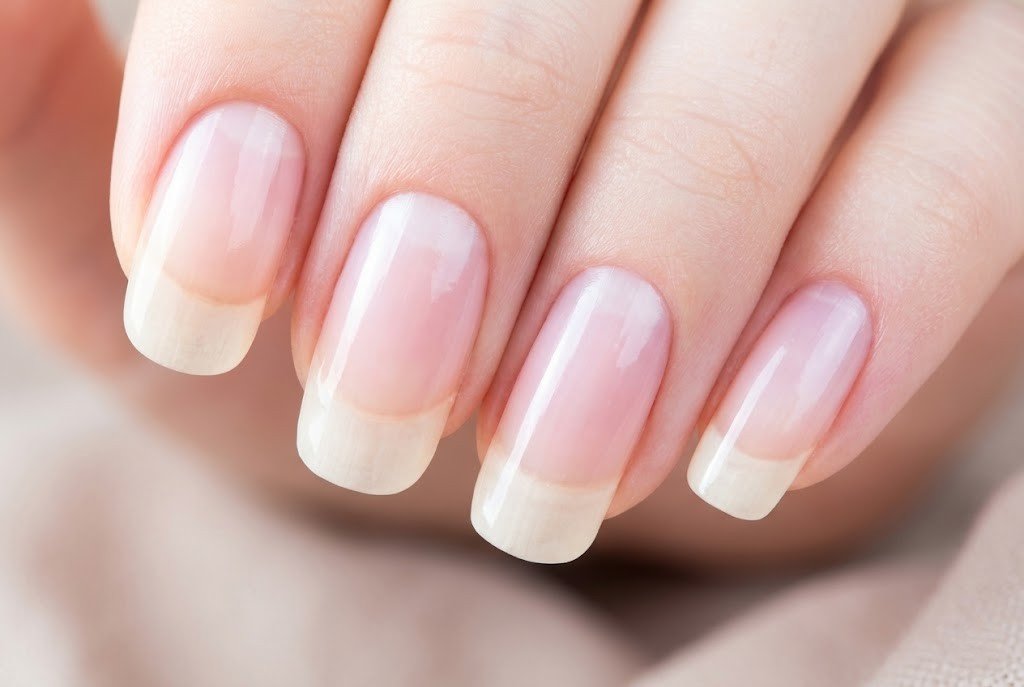
Consider speaking to your doctor if you notice:
- Multiple deep horizontal ridges appear across several nails without a clear cause, such as recent illness, injury, or medication.
- Vertical ridges that appeared suddenly and rapidly worsened, particularly if accompanied by fatigue, hair thinning, or weight changes.
- Ridges alongside colour change nails that are yellowing, darkening, or developing brown or black streaks alongside the ridging.
- Nail separation from the nail bed if the nail plate is lifting at the tip, in addition to ridging, warrants attention.
- Ridges alongside other nail health signs like pitting, unusual thickening, or chronic breakage.
Conditions including hypothyroidism, iron deficiency anaemia, psoriasis, and lupus can all present with nail changes. None of these can be diagnosed from nail appearance alone, but they are worth ruling out with a simple conversation and, if appropriate, blood work. A dermatologist who specialises in nail health can examine your nails in detail and refer you onward if needed.
CONCLUSION
Nail ridges are not an emergency. Google might make them feel like at midnight. Most of the time, they are simply your nails aging along with the rest of you or asking for a little more moisture, a little more iron, a little more care. Understanding the difference between vertical and horizontal ridges gives you something most people do not have when they spot a change in their nails: actual context. And context is what separates a quiet reassurance from a spiral of unnecessary worry.
If yours are vertical, gradual, and come without other symptoms, start with hydration, a ridge filler base coat, and a look at your diet. If they are horizontal, sudden, or appear across multiple nails at once, take them to a doctor. Your nails are good communicators. You just needed the translation.
For the next step in building stronger, healthier nails from the ground up, read our guide to [building a nail care routine that actually works].