Now Reading: How to Fix a Broken Nail at Home: 4 Methods That Work
-
01
How to Fix a Broken Nail at Home: 4 Methods That Work
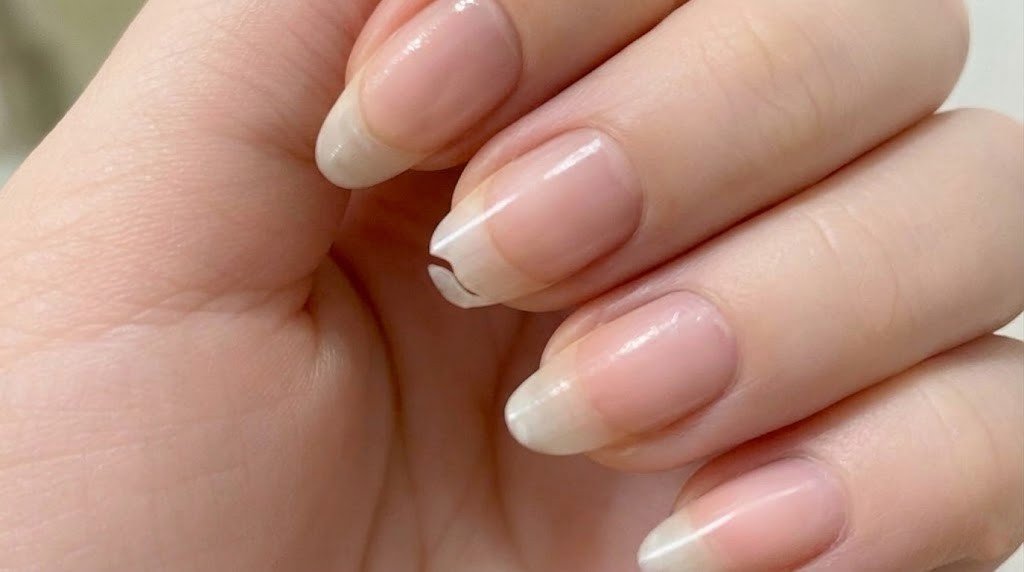
How to Fix a Broken Nail at Home: 4 Methods That Work
How to Fix a Broken or Split Nail at Home (Fast Emergency Repairs)
There is nothing quite like that sickening snap of nail breakage. It just takes a second, and your nail is caught by any jacket zip or a door handle and leaves you just staring at a broken nail, wondering what to do. Sound familiar?
The good news is that you can fix most broken and split nails at home without losing the nail entirely. No need for any salon visit. Listing four real proven methods for how to fix a broken nail depending on the level of damage it got and from which position it broke. This post also covers tips for fixing vertical nail splits, how to protect a short nail that can’t be repaired and when a nail needs more than a fix at home.
Quick Answer: To fix a broken nail at home, first know the position of breakage whether it is above or below the free edge of the nail. If it is a partial break or a vertical split the tea bag method works best. For a partial break or split, the tea bag repair method works best. To hold the nail together until it grows, take a small piece of a tea bag with sealing base coat or nail glue, this reinforces the nail plate. Nail glue often works for a clean break with enough length remaining. Immediately after any repair, trim, file smooth, and protect the nail.
In This Post
- First Things First – Assess the Damage
- How to Fix a Broken Nail at Home: 4 Methods That Actually Work
- How to Fix a Vertical Split Nail
- How to Fix a Broken Nail Until It Grows Out
- What Causes Fingernails to Split and Break
- When to Skip the DIY Fix and See a Doctor
First Things First: Assess the Damage
Not all breaks are the same, so stop and take a look at what you are going to fix before grabbing any nail glue. The best working method for one can fail for any other break, and a wrong fix can make things worse.
Three main types of damage you will run into are:
- A partial break or split: when the cracked nail is still attached from one or both sides. In this break, the nail plate is intact enough to work with, and it can be easily repaired.
- A clean break: when the nail completely snaps off or hangs by the thinnest edge. This can be handled by a nail glue if there’s decent length left, but the trim-and-protect method works better if the break is very short.
- A tear close to or below the free edge: The most painful one that needs the most care. When the nail has torn into the soft tissue near the nail bed, skip the DIY repairs and visit the When to See a Doctor section first.
Also check the tearing and bleeding on the skin along the sides of the nail. A yanked nail sometimes pulls the skin tissues around the nail. Change the approach to fixing if you see any bleeding around the nail fold.
Pick your method after knowing the type of break you are dealing with.
How to Fix a Broken Nail at Home: 4 Methods That Actually Work
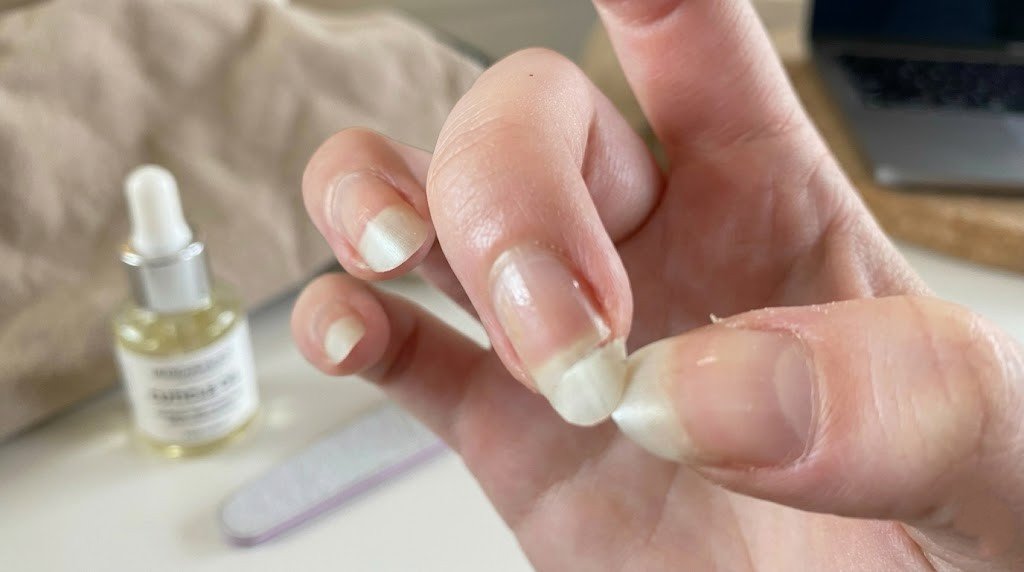
Method 1: The Tea Bag Repair (Best for Splits and Partial Breaks)
Most women often use this method after discovering it by accident. This method genuinely works.
What you need: An empty tea bag (the paper kind, not mesh), scissors, a base coat or clear nail polish, and nail glue or a good top coat.
How to do it:
- Take a small piece of the tea bag that roughly equals your nail, using scissors.
- On the broken area of your nail, apply a thin layer of base coat and leave it until it gets tacky but not fully dry.
- Now, using your fingerprint or an orange stick, gently press the tea bag patch over the break.
- After it dries, apply a second layer of base coat over the top to completely seal the patch.
- When it is fully dry, smoothly buff and apply a top coat.
The tea bag creates a flexible reinforcement layer over the nail plate, bonding with nail polish. It holds the split together while the nail grows out without adding heavy bulk.
The mistake to avoid here: Do not use a large piece of a tea bag. The extended patch can peel from the sides, lifting the whole repair. Take a piece that exactly fits the nail size.
Method 2: Nail Glue for a Clean Break
If the nail fully snaps off but you have both pieces, nail glue works genuinely fast for broken nails. And it works best if the nail breaks above the midpoint and enough nail plate is left for bonding.
What you need: Nail glue (cyanoacrylate-based, formulated for nails), a nail file, a buffer.
How to do it:
- Clean and dry both nail surfaces and do not get them wet as it prevents bonding.
- Apply the tiniest amount of glue to one surface, less than you think you need.
- Join and press the broken piece back into its exact position and hold firmly for 60 seconds.
- After it bonds, gently file the seam so the join seems smooth..
- Afterwards, seal with a layer of top coat and protect.
Mistakes to avoid: Do not use too much glue as it spills onto nail fold and skin and is quite uncomfortable to remove. Just a hairpin-width line of glue is enough. The line is all you need.
If the broken piece is lost or too small to reattach, directly apply a thin line of glue along the crack instead to seal the break and prevent it from spreading further up the nail.
Method 3: The Nail Wrap or Silk Patch Method
This often requires a salon visit as you need a proper nail repair kit that contains pre-cut silk or fibreglass wraps doing the same job as the tea bag. Silk or fibreglass wraps have better precision and a stronger hold. You can invest in a proper nail repair kit if your nails often break because of doing regular manual work.
The application process for wraps is the same as the tea bag method. Firstly, clean the nail, apply wraps and press, then seal with a layer of top coat. The material of silk or fabric wrap is thinner and more uniform, making the join feel smoother
The mistake to avoid: Do not skip the seal step. The wrap may catch things or peel off if not sealed with at least two layers of top coat.
Method 4: The Trim-and-Protect Method (When the Nail Is Too Short to Save)
Some breaks are too low or simple; repairing such breaks that have no free edge makes the problem worse. The repair sticks to living tissue and will not bond properly, which risks trapping bacteria under the patch.
In such cases, a good approach is to trim the nail in a very clean way using nail scissors, not clippers. Smoothly file the nail and apply a layer of hardener to protect.
This is smart nail care and not a defeat. A firmly trimmed and protected nail grows back faster and more evenly than the over-repaired nail. Pair this with a cuticle oil routine to nourish the nail matrix while the nail regrows. X
How to Fix a Vertical Split Nail
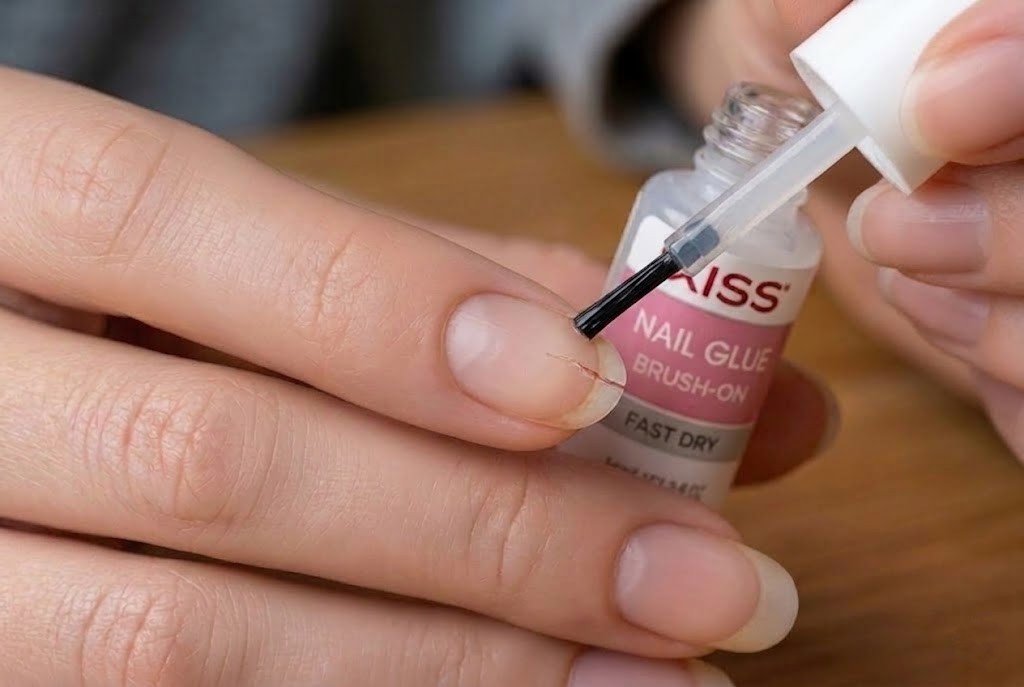
Vertical split is a different problem from a standard break with a different cause and a different fix. This goes lengthwise from free edge toward the cuticle
The tea bag method works for a split nail repair too if the split is shallow and near the tip. Seal the split thoroughly with a size of patch that equals the full length of the split so it seals the split from travelling further.
Do not force two sides of a deeper split that goes towards the base of the nail. Stabilise it by a thin line of nail glue along the split. Afterwards cover immediately with a full tea bag or silk wrap over the top.
Vertical splits tend to come back, which makes them quite tricky. You need to find and address the underlying cause if a nail splits often that may be chronic dryness, nutritional gaps, or repeated water exposure. The repair is just a patch, not a permanent solution. Stronger , healthier nails that are moisturized and are cared for are very less likely to split.
If the same nail splits from the same position it is worth mentioning to a dermatologist. It may be addressing an underlying nail matrix issue and not just surface dryness.
How to Fix a Broken Nail Until It Grows Out
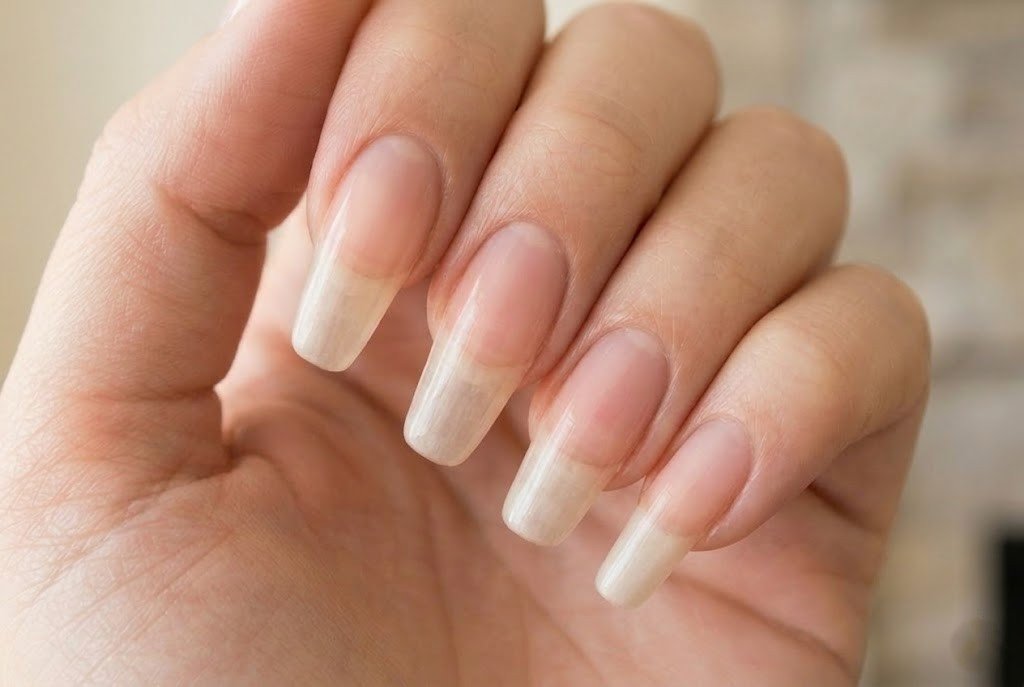
Here’s how to protect a repair when you have to live with it for a few weeks until your nail grows.
Keep it polished. Keep the protective barrier of a top coat on repair that reduces the chance of lifting. Reapply top coat every two to three days.
Moisturise daily. Keep your nail moisturised with cuticle oil daily as the nail matrix responds well to consistent hydration. A well-nourished matrix produces a stronger nail plate as it grows through.
Avoid prolonged water exposure. Nails slightly expand and contract when they are exposed to water and then dry. And if this expansion and contraction happens repeatedly it can stress the join of repair. Use gloves while having exposure to water and avoid long soaks until the nail has grown past the repair point.
File, never pull. File the nail smoothly if the repair catches something. Never pull or tear at a nail it risks extending the break toward the nail bed.
It takes about three to six months, depending on diet and age , for a nail to grow from base to tip. The damaged nails grow past the free edge when no repair is needed in a few weeks.
What Causes Fingernails to Split and Break
Knowing the cause of breakage helps in preventing the breakage.
Dehydration of the nail plate: Nail mostly crack or split because of dehydration. The nail plate is made up of a fibrous protein called keratin that needs moisture to stay flexible. Dry nails have more chances of breaking.
Repeated wetting and drying: Prolonged exposure to water and continual wetting and drying strips the nail plate of its natural moisture. Repeated cycles of expansion and contraction weaken the keratin structure over time like if you frequently do dishes, cleaning or swimming.
Nutritional gaps: Three most common nutrients linked to nail strength are: Biotin, iron, and protein. Often splitting of nails reflects internal deficiency of nutrients in diet. According to the Healthline, changes in nail texture or integrity that persist despite topical care are worth discussing with a doctor who can check for underlying nutritional or health factors.
Mechanical damage: Using nails as tools for opening cans, cars and typing contributes to breaking and spitting. Dry nails do not bear much stress or force and easily break.
Acetone overuse: Acetone based removers absorb the layer of natural oils of the nail plate and makes the nail weak to slit or break.
When to Skip the DIY Fix and See a Doctor
Most broken nails are just a minor structural failure that can be easily fixed at home but some may be telling something more.
It is worth visiting a dermatologist or your doctor if:
- The nail has torn below the free edge: If the break extends to soft tissues around the nail and it is bleeding that does not stop for within 10 minutes even after applying pressure to break.
- You notice signs of infection: After any injury if you notice increasing redness, swelling. Damage to the nail bed invites bacteria.
- The same nail keeps breaking or splitting in the same spot without any obvious cause. Repeated damage to the nail may be a sign to any underlying infection or any nail matrix issue.
- Multiple nails are breaking or splitting simultaneously without a clear external reason. Widespread nail fragility can sometimes be linked to thyroid function, iron deficiency anaemia, or other systemic factors worth investigating.
Most nail breaks are minor that heal completely on their own. But a nail that is behaving strangely is always worth a quick professional opinion.
Breaking a nail feels quite more frustrating and painful in the moment than it actually is. But a right method applied quickly can fix most breaks, splits and clean snaps. Even low vertical cracks can be stabilised at home and grown out without losing the nail at all.
The repair itself is only half the job, though.A nail that breaks once under normal conditions is often a nail that was already compromised, dry, thin, or under repeated stress it could not absorb. Learning how to fix a broken nail buys you time. Knowing the cause helps in preventing it from happening again.
If you want to build genuinely stronger nails from the inside out, the next step is understanding what actually makes nails brittle.