Now Reading: What Your Brittle Nails Say About Vitamin Deficiency
-
01
What Your Brittle Nails Say About Vitamin Deficiency

What Your Brittle Nails Say About Vitamin Deficiency
Brittle Nails and Vitamin Deficiency: What Your Body Is Telling You
Watching your nails snap, peel, and split even after trying every strengthening polish available could be one of the most frustrating things. You take care of them, moisturize, but still your nails feel thin and fragile. The answer is not in the bathroom cabinet; rather, it is the one missing from your plate.
Brittle nails and vitamin deficiency are more related than most people think, and the different ways in which your nails are failing are actually signals to different nutrient deficiencies in your body. This post covers which deficiencies most commonly cause weak nails, recognizing and reading the signs your nail plate is already sending you, and exactly how to address them.
Quick Answer: Brittle nails are most commonly cause of deficiency of any nutrient like biotin, iron, vitamin D, vitamin B12, and zinc. When the body lacks any of these nutrients, the nail matrix cannot produce strong, flexible keratin, which results in nails that snap, peel, split, or develop ridges. The most effective path to grow genuinely strong nails is to identify and address the specific deficiency through diet or guided supplementation
In This Post
- Why Are My Nails So Brittle? Understanding the Root Problem
- Signs of Vitamin Deficiency in Nails: What to Look For
- Which Vitamin Deficiency Causes Brittle Nails?
- Vertical Ridges on Nails and Vitamin Deficiency: Are They Connected?
- Brittle Nails Treatment: What Actually Works
- Mistakes That Make Brittle Nails Worse
- When Your Nails Are Telling You Something More
- Frequently Asked Questions About Brittle Nails and Vitamin Deficiency
Why Are My Nails So Brittle? Understanding the Root Problem
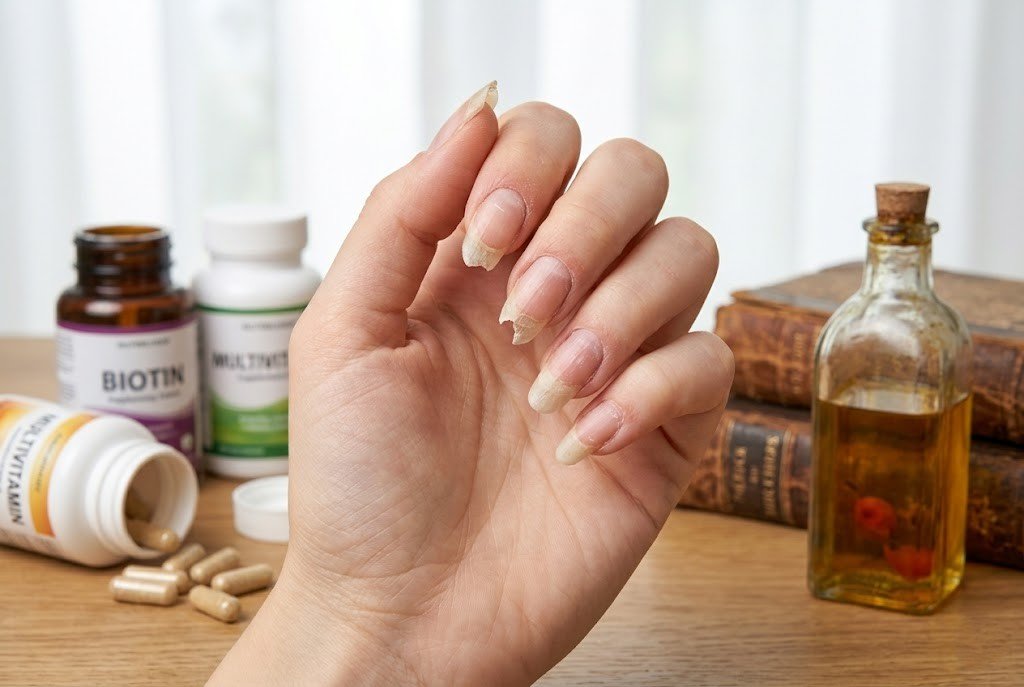
Your nails keep a record of what has been happening inside your body for the past three to six months, which is the time it takes for a full nail to grow from base to tip.
The nails are entirely built from a protein named keratin, the protein that also forms your hair and the outer layer of your skin. When your body has enough nutrients to produce sufficient keratin, your nails grow dense, slightly flexible, and resistant to snapping. When the body does not have enough nutrients, it produces uneven layers, causing nails that split, peel, and snap. This condition of the nails is called onychoschizia by dermatologists.
Brittle nails are actually a symptom, not a condition. Nails dry out due to certain external factors like frequent hand-washing, acetone exposure, and cold, dry air. But if you notice your nails are stubborn to the same length for over months, it may be a signal of a nutritional gap.
Signs of Vitamin Deficiency in Nails: What to Look For
To know exactly which nutrient is missing, you first need to identify and understand what your nails are showing. Different conditions of the nails tell about different deficiencies, and you need to learn to read those conditions.
1. Texture Changes
Horizontal splitting of nails into layers is the indicator of onychoschizia, and this condition is strongly associated with iron deficiency and insufficient biotin. Soft nails that bend rather than break cleanly tend to point toward calcium or magnesium gaps; a deficiency of both of these nutrients affects how firmly the keratin layers bond.
2. Color Changes
The pink skin visible through the nail plate is called the nail bed. Pale or washed-out nail beds are a sign of iron deficiency anemia, as the pink color of the nail bed comes from the blood supply beneath it. Persistent white patches on multiple nails have been associated with zinc deficiency in fingernails. Yellowing nails are more commonly linked to fungal issues or medication. Vitamin E gaps also play an occasional role in yellow nails.
3. Shape Changes
Spoon-shaped nails, where the nail plate curves inward, are a classical indicator of iron deficiency, which is called koilonychia. Thin Vertical ridges are usually caused by ageing, but deficiency of vitamin B and iron can deepen vertical ridges. Horizontal ridges that cross the full width of the nail (Beau’s lines) signal a more significant disruption to nail matrix activity and are worth mentioning to a doctor. For a complete breakdown of what nail ridges actually mean for your health, our dedicated guide covers both vertical and horizontal ridges in detail.
Which Vitamin Deficiency Causes Brittle Nails?
Several different nutrient gaps can produce brittle, weak nails, and sometimes different nutritional gaps exist simultaneously. Here is what the evidence shows for each.
Biotin (Vitamin B7)
Biotin provides direct support to the metabolism of amino acids that are used to build keratin. The quality of the nail matrix is entirely compromised by the genuine deficiency of biotin. True biotin deficiency is uncommon in people eating a varied diet, and it is more likely in those who regularly consume raw egg whites that block absorption of biotin or in those who take certain anticonvulsant medications. People who are not biotin deficient, taking excessive biotin from supplements or through diet, may not produce any noticeable results.
Iron Deficiency and Brittle Nails
Iron deficiency is one of the most common nutritional deficiencies globally and is more common in women of reproductive age, and it has a well-established link to nail health. Iron is essential in the process of generating healthy keratin. When iron gaps are produced, nails become thin, brittle, and prone to splitting. Iron deficiency brittle nails can also progress to koilonychia. Byrdie notes that iron deficiency is one of the most frequently overlooked causes of nail brittleness in women and that nail changes are often the first visible signal before other symptoms appear
Vitamin D Deficiency Nails
Vitamin D receptors exist within nail matrix cells, and it plays an important role in regulating keratinocyte growth, the cells responsible for producing keratin. Vitamin D makes the nail fragile and reduces the nail growth rate. According to stats, over a billion people worldwide have vitamin D deficiency, and this is one of the first levels worth testing if your nail health is declining without any obvious reason.
Vitamin B12 Deficiency Nails
Discoloration of nails, often a brownish or bluish tint near the nail base, brittle texture of nails, and slowed growth are related to B12 deficiency. B12 is exclusively found in animal products, which means vegans and vegetarians may particularly have a B12 deficiency. People over 50 and those taking metformin or long-term acid-reducing medications absorb B12 less efficiently. Deficiency can develop silently over years.
Zinc and the Overlooked Two
Zinc deficiency causes white spots on fingernails and makes them thinner. Irregular surface texture or horizontal banding on nails points towards more pronounced gaps in zinc. Foods rich in zinc include meat, shellfish, pumpkin seeds, and legumes.
Calcium and magnesium are usually less focused on nail contents than they deserve. Calcium aids cross-linking of keratin and supports the hardness of the nail plate. Magnesium deficiency nails can present as brittle texture and sluggish growth. If you don’t have an iron or vitamin B deficiency but your nails are still brittle and weak, then these two are worth checking.
Vertical Ridges on Nails and Vitamin Deficiency: Are They Connected?
Vertical ridges on nails are extremely common and become more visible with age as the nail matrix naturally slows. Mostly, they are simply a normal part of getting older and not a deficiency sign or a health warning.
Still, vertical ridges on nails can be linked to a vitamin deficiency. Mostly, iron deficiency has been associated with excessive vertical ridging. B12 gaps can affect how evenly the nail matrix lays down the nail plate, and its deficiency can create a rougher and more uneven surface.
If you have had a faint ridge that has stayed consistent for years, nutrition is unlikely to be the cause. But if your ridges have become noticeably deeper over the recent few months, especially with increased brittleness or color changes in the nail bed, it is worth bringing to your doctor alongside a basic blood panel.
Brittle Nails Treatment: What Actually Works
Start With Food, Not Supplements
Food sources of nutrients have cofactors that help them to be absorbed and used properly in the body. So they are more preferable than taking nutritional supplements.
For iron: lean red meat, lentils, tofu, and spinach paired with vitamin C to maximize absorption. For biotin: cooked eggs, almonds, sweet potatoes, and salmon. For vitamin D: fatty fish, egg yolks, fortified milks, and sensible sun exposure. For B12: meat, fish, dairy, eggs, and for vegans, reliably fortified foods or supplementation. For zinc: oysters, beef, pumpkin seeds, and chickpeas.
When Supplements Make Sense
Supplements are most appropriate when any deficiency is confirmed through a blood test or when dietary intake is genuinely limited by circumstance, like being vegan, food allergies, pregnancy or absorption issues. Taking an excess of any nutrient through supplements without knowing your baseline levels of that nutrient in your body can occasionally cause its own problems. Like taking iron supplementation without a confirmed deficiency can cause digestive issues and lead to excess accumulation over time.
Protect the Nail Plate While You Recover
Take care of your nails to reduce any additional damage while you are addressing any nutritional root cause. Trim nails regularly, and prefer short lengths, as less length means less leverage and fewer snaps. Wear gloves for washing up and regularly apply cuticle oil to the nail fold. Following a consistent nail care routine for weak and damaged nails gives your nail matrix the best possible environment to recover in. Give your nails a breathing window by taking breaks from regular nail paints and avoiding acetone removers. These steps do not fix the deficiency, but they protect the nail plate while your nail matrix recovers.

Mistakes That Make Brittle Nails Worse
- Treating the surface when the problem is internal. Even the most expensive nail hardeners cannot replace the nutrients that your nail matrix needs. Layering strengthening products over deficiency-driven brittleness treats the symptom only while the cause keeps going.
- Defaulting to biotin without investigating further. Biotin is heavily marketed for nail health, but it will not do much if the cause of your brittleness is an iron or vitamin D deficiency. Always get a blood panel before committing to a supplement.
- Eating raw egg whites regularly. Raw egg whites contain avidin protein that binds to biotin in the gut and blocks its absorption. People using raw eggs in protein shakes can develop biotin deficiency even on an otherwise nutritious diet. Prefer cooked eggs as cooking deactivates avidin entirely.
- Cutting food groups without compensating. Plant-based diets, strict low-carb protocols, and dairy-free eating can all create nutritional gaps that are eventually visible in nail quality. Restricting whole food categories without conscious nutritional compensation increases deficiency risk over time.
- Waiting for nails to improve on their own. Nail health shows deficiencies that are rarely resolved without directly addressing the cause. If your nails have been worsening for months, a single blood test appointment will tell you more than months of guessing ever could.
When Your Nails Are Telling You Something More
Most brittle nails have a manageable nutritional explanation, but some changes in nails need professional attention sooner rather than later.
If any of your nails grows a new dark vertical stripe running the length of one nail, especially if it is widening or the pigment is spreading to surrounding skin, see a doctor without delay. This is not related to any nutritional deficiency and requires evaluation.
If your nail beds look significantly pale, bluish, or yellowish in addition to fatigue, breathlessness, or unusual cold sensitivity, these can point to anemia or circulation issues and are worth investigating through blood work.
If pronounced horizontal ridges have appeared across multiple nails, that is a signal of a past disruption significant enough to interrupt nail matrix activity, and a conversation with your doctor about the trigger is warranted.
Only nail changes do not diagnose any illness. But they are the body’s quiet signal that something internally shifted, and a dermatologist helps you in reading it properly.

Frequently Asked Questions About Brittle Nails and Vitamin Deficiency
What are the signs of vitamin deficiency in fingernails I should watch for?
Key nail signs of vitamin deficiency include: horizontal layer splitting, spoon-shaped nail plates, pronounced vertical ridging that has worsened over months, pale or discolored nail beds, and persistent white patches across multiple nails. Look for patterns rather than single signs, especially when nail changes are accompanied by fatigue or hair thinning elsewhere.
Can B12 deficiency cause hair loss as well as brittle nails?
Yes. B12 deficiency can affect both hair and nails because both rely on healthy cell replication and keratin production. Hair follicles are among the most rapidly dividing cells in the body, which makes them sensitive to nutritional gaps. Hair shedding alongside brittle nails, particularly in someone following a plant-based diet, is a reasonable prompt to request a B12 blood test specifically.
How long does it take for nails to improve after fixing a deficiency?
Nails grow roughly 3 millimeters per month, meaning the nail plate takes three to six months to fully replace itself. Improvement in texture and strength typically becomes noticeable within two to three months of consistently addressing a deficiency. New growth appearing at the nail base is the earliest visible sign that recovery is underway.
What vitamin deficiency causes brittle nails most commonly?
Iron and biotin deficiencies are most frequently linked to brittle and splitting nails. Iron affects oxygen delivery to the nail matrix while biotin directly supports keratin production. Vitamin D, B12, and zinc deficiencies can also cause brittle nails but often alongside other symptoms. A blood test is the only reliable way to identify which deficiency is actually present.
What do nail ridges mean, and when should I be concerned?
Vertical ridges running from base to tip are usually a normal aging change and are not medically concerning on their own. They can deepen with iron or B vitamin deficiencies, so a noticeable recent worsening is worth investigating. Horizontal ridges crossing the entire nail width are different. They indicate a past disruption to nail matrix activity and deserve professional attention.
CONCLUSION
Nails are information, not vanity. Brittle nails and vitamin deficiency have a real biological connection. The fact that yours brought you here looking for something more useful than “apply a hardener and try again” means you are already thinking about this the right way.
The most important next step is not buying a supplement but to book a basic blood test to check ferritin, vitamin D, B12, and zinc. One appointment answers what months of guessing cannot. Once you know where the gap actually is, fixing it becomes far more straightforward, and the improvement in your brittle nails will follow.
Give your nail matrix what it needs, protect what it produces, and be patient with the process.