Now Reading: Your Natural Nail Care Routine for Strong, Healthy Nails
-
01
Your Natural Nail Care Routine for Strong, Healthy Nails
Your Natural Nail Care Routine for Strong, Healthy Nails
Your Natural Nail Care Routine for Strong, Healthy Nails at Home
Watching your nails break before even getting a chance to grow seems quite defeating. You moisturize and try to be careful, buy a new cuticle oil, use it twice, and then forget about it for three weeks. Yet nothing seems to actually stick, and nails stay thin, peeling, and snapping at the worst possible moments. This problem is not actually related to the product you use but to how consistently you use the product.
The good news is that consistency is something you can fix. This post gives you a complete natural nail care routine built around a real weekly schedule, not an ambiguous list of tips, but an actual day-by-day schedule for fingernail care that can be followed easily without demanding too much time. Here you will know exactly what your nails need daily, weekly, and monthly, a guide on how to strengthen nails from both the outside and the inside, and a pointing out of habits that quietly make things worse.
Quick Answer: A natural nail care routine combines daily habits including moisturizing, protecting, and gentle cleaning with a once-weekly reset session of filing, cuticle care, and a strengthening treatment. Consistency matters more than any product to get real results. It almost takes four to six weeks until nails feel stronger and less brittle after following a simple, steady nail care routine.
In This Post
- Why Your Nails Stay Weak No Matter What You Try
- Your Natural Nail Care Routine Day by Day
- How to Strengthen Fingernails From the Inside Out
- How to Moisturize Nails the Right Way
- Mistakes That Quietly Destroy Healthy Nails
- When Your Nails Are Telling You Something More
- How to Keep Nails Clean Without Damaging Them
- Frequently Asked Questions About Natural Nail Care
Why Your Nails Stay Weak No Matter What You Try
Nail care is treated as a reactive habit most of the time, like if your nail breaks, you apply oil for a few days. You get a new strengthening polish, use it once, and then leave. Sounds familiar? The problem is actually the lack of pattern and regularity in using any product.
Nails are primarily made of keratin, which is a tough fibrous protein that makes up your hair too. The hard visible surface you file and paint is the nail plate; it is built in layers from the nail matrix, the tissue hidden just beneath your cuticle. When the nail matrix consistently lacks moisture, nutrients, or gentle handling, it produces weaker, thinner layers. No amount of occasional treatment reverses that weakness, but a steady routine does.
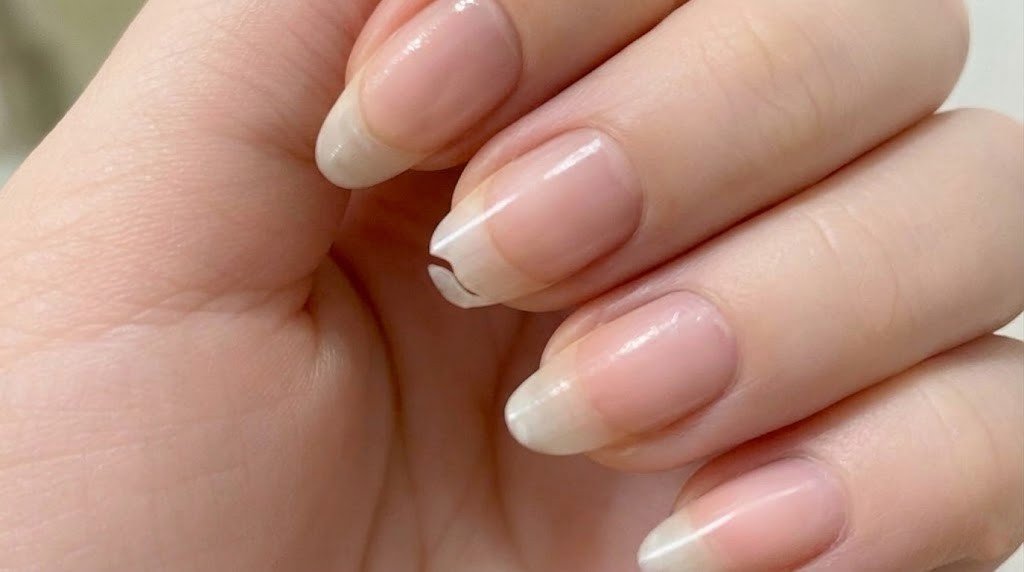
The other issue is external damage that your nails get, which develops over time. Frequent water exposure without rehydrating nails, harsh nail paint removers containing chemicals, forceful filing, even just typing without protection- it all adds up inside the nail plate. Small separations form between the layers of keratin layers, and then you start to see peeling, snapping, and splitting at the free edge.
The fix is not complicated, but it does need to be consistent
Your Natural Nail Care Routine Day by Day
This section covers what most nail care posts skip entirely. They give you tips but do not give you a schedule. Here is what the actual system is.
Every Day The Non-Negotiables
Nail maintenance takes about two minutes per day and is genuinely all required once the habits are in place.
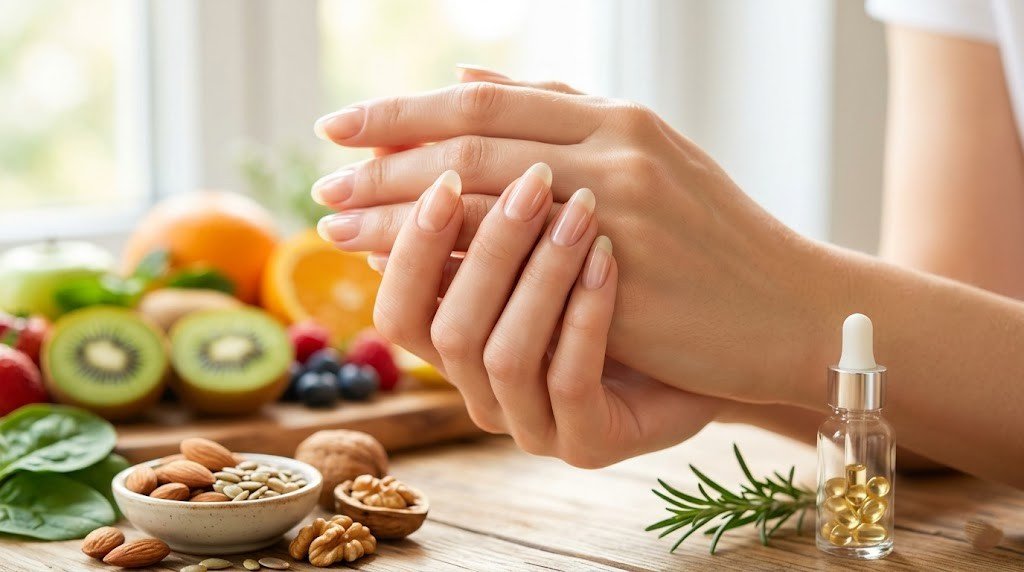
- Moisturize every time you wash your hands. Water strips the moisture from the nail plate more than most people realize. Every wash-and-dry cycle pulls moisture from the keratin layers and forms small separations. Place a hand cream or cuticle oil bottle at your sink and apply it immediately after drying your hands, not delaying to apply before bed, not when you remember, but right after washing when the skin is still slightly warm and receptive.
- Protect your nails from harsh exposure. Make a habit of wearing gloves while washing dishes and using cleaning products. This is not very demanding, and it is the single most effective protective step you can take. Prolonged water exposure makes nails more prone to tearing as it softens the nail plate.
- Leave your cuticles alone. Do not pick, cut, or push back cuticles aggressively throughout the day. The cuticle seals the nail fold against bacteria and fungi protecting against infections. The nail fold is the groove where your nail meets your skin.
- Apply cuticle oil before bed. Apply cuticle oil regularly before going to bed and massage gently into the base of each nail, feeding the nail matrix while you sleep. This strengthens the nail. It does not need to be very expensive, but quality. Jojoba oil, vitamin E oil, or any good quality cuticle oil works perfectly.
If you want to understand exactly how to push back cuticles correctly as part of this daily habit our complete guide covers every step.
Once a Week, Your Reset Session
Pick one day, mostly Sunday evenings, that works beautifully for most people, and give yourself fifteen to twenty minutes for your full nail care routine.
- Remove and inspect. Remove the nail paint you’re wearing with an acetone-free remover and examine each nail in good light. Look for any changes in color, texture, or shape of any nail. If your nails are smooth, pinkish, and slightly translucent at the free edge, they are healthy. If there’s any yellowing, unusual ridges, or white spots, that’s worth noting.
- Soak briefly, not long. Soak your nails in warm water for only two minutes to soften the nail bed and cuticles to make the next steps easier. Prolonged soaking swells the nail plate and makes it more fragile, so do not soak longer.
- Gently push back cuticles. Use a clean wooden or rubber-tipped cuticle pusher and gently ease the cuticle back from the nail plate. Never cut healthy cuticle tissue; this will remove the protective seal and increase the chances of nail fold infections.
- File, do not saw. Use a glass or crystal nail file, not a rough and uneven metal one. File gently in one direction only, from side to center. Back-and-forth sawing motion separates the keratin layers at the free edge, which primarily causes nail peeling that people mistake for a product problem.
- Buff lightly if needed. A four-sided buffer can smooth surface ridges and improve shine, but do this cautiously, once every two to three weeks at most. Frequent and aggressive buffing thins the nail plate.
- Apply a strengthening treatment. This is your weekly intensive. Applying a layer of keratin-enriched base coat, a nail hardener that suits your nail type, or a natural nail strengthening cream gives the nail plate reinforcement from the outside while your nutrition and hydration work from the inside.
- Seal with cuticle oil. Always make sure to finish with cuticle oil.
Once a Month: The Deep Treatment
Once a month, follow a session of deeper treatment of your nails.
- Trim properly. Never tear or bite your nails; instead, use sharp nail scissors or a quality clipper. Cut straight across and then file gently to round the corners of the nails. Ensure to do it once a month to maintain structural integrity across the nail plate and prevent stress fractures at the sides.
- Do a nourishing soak. Do a five-minute warm soak with a few drops of jojoba oil or vitamin E oil to condition the nail bed and surrounding skin more deeply than daily application alone can achieve.
- Go polish-free for at least a few days. Let your nails breathe; give them a break from the product. The nail plate benefits from periods of breathing room to restore its natural balance. This is not a myth; continuous coverage, especially with gel or acrylic, prevents the natural exchange of moisture through the nail plate.
How to Strengthen Fingernails From the Inside Out
Relying only on external treatments offers so much treatment. New nail cells are built continuously by the nail matrix, which causes about three millimeters of growth per month on average, and your daily diet heavily affects the quality of those cells.
How to Strengthen Nails Naturally Through Nutrition
Protein Keratin, the foundation of the nail, is a protein, and your body cannot produce keratin without sufficient dietary protein. Women eating low-protein diets frequently notice their nails becoming softer and more prone to peeling long before noticing changes in anything else.
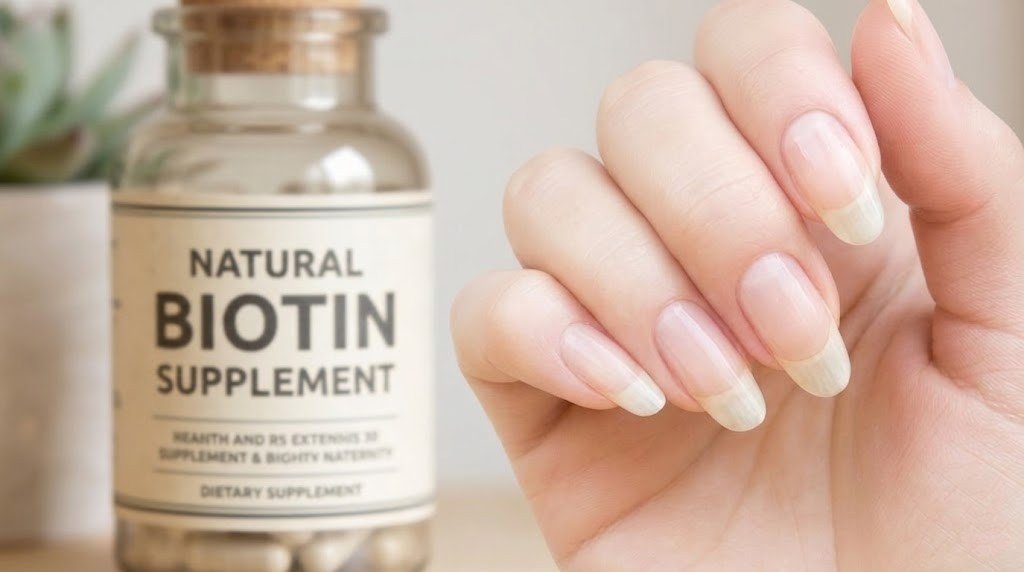
Biotin, vitamin B7, is the most studied nutrient for nail strength. Marie Claire notes that biotin, alongside a protein-rich diet, is one of the most consistently recommended approaches for improving nail quality from the inside out. Good food sources of biotin include eggs, almonds, sweet potatoes, and salmon. Taking supplements is an option, but take advice from your doctor before starting any new supplement.
For a complete science-backed breakdown of how biotin specifically affects nail strength and what dosage actually works, read our full guide on biotin for nail growth.
Iron is significantly more important to your nail health than most people realize. One of the most common nutritional causes of weak, spoon-shaped nails is iron deficiency. If your nails have been consistently soft and thin despite regular care, low iron could be the cause. It is worth asking your doctor about.
Hydration. Nails tell about your internal hydration level. Long-term dehydration of nails makes them brittle and weak. Eight glasses of water a day is an accurate and tried recommendation.
How to Moisturize Nails the Right Way
Applying hand cream occasionally and calling it done is absolutely the wrong way.
The nail plate does not have sebaceous glands producing its own moisture. It only gets hydration from external application or internal water intake. And insufficient hydration causes the keratin layers to dry out, contract slightly, and begin to separate, which is exactly peeling when looked at the microscopic level.
Use cuticle oil, not just hand cream. Most hand creams sit only on the surface, while cuticle oil, especially jojoba which has a molecular structure. It is remarkably similar to the skin’s natural sebum and penetrates the nail plate and the nail bed below it. Apply it to the cuticle and base of the nail and massage in small circles for thirty seconds per hand.
Apply nail moisturizer after every water exposure. Build the habit of applying nail moisturizer after washing dishes, after a shower, and after cleaning. Rehydrate your nails immediately after they dry. This single habit completely shifts dry nails into a different condition within two to three weeks.
Do not neglect the hyponychium. This is the skin just under the free edge of your nail. In people with dry nails, it tends to dry out and crack, opening the door to bacterial infections. Apply a drop of cuticle oil under the free edge once a week, addressing this quietly and effectively.
Mistakes That Quietly Destroy Healthy Nails
Using acetone remover every week
Acetone is effective in extremely drying the nail plate and the surrounding cuticle. Occasional use of acetone-containing removers is fine, but weekly use removes the natural lipids from the keratin layers and leaves nails brittle and dehydrated. It’s better to switch to an acetone-free remover if you regularly use it and save acetone for gel removal only.
Filing in both directions
Back-and-forth filing feels faster, but it is not worth it. Bidirectional filing splits the keratin layers at the free edge at the microscopic level. Those tiny frays become peeling and splitting when they catch on fabric or widen with water exposure. Always file in one direction.
Cutting cuticles instead of pushing them back
The cuticle exists for a reason. It is the protective seal between the living skin of your nail fold and the outside world. Cutting it removes that seal and creates a small open wound that is vulnerable to bacterial and fungal infection. Dermatologists consistently advise against cutting cuticles for exactly this reason. Do not cut cuticles; rather, gently push them back.
Skipping the base coat
Wearing nail polish regularly without a base coat allows the pigments in the polish to seep into the porous surface of the nail plate and cause yellowing. More importantly, a good base coat provides a protective layer that buffers the nail plate from the mechanical stress of polish application and removal.
Treating nail care as a sometimes thing
This is the biggest mistake, like using nail oil three times a week delivers a fraction of the benefit of the same oil used every single day. The nail matrix responds to continuous input, consistent hydration, consistent nutrition, and consistent protection.
When Your Nails Are Telling You Something More
Most nail problems can be effectively addressed through a consistent natural nail care routine. But some changes in your nails go beyond what any routine can address, and they may be a sign of an underlying problem.
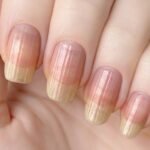
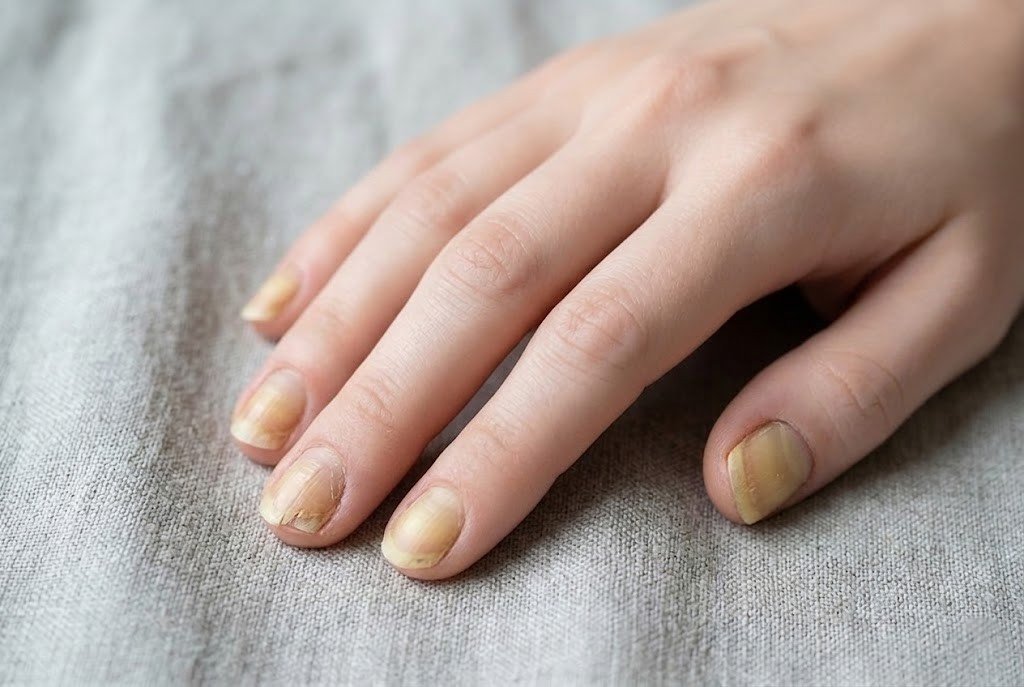
If your nails develop a yellow or brownish color and it does not come from polish staining, it is worth speaking to your doctor or a dermatologist. Fine vertical ridges are simply part of aging, but if you notice your nails developing deep horizontal ridges, it may be reflecting a period of physical stress or illness that is worth discussing with a professional. Extremely spoon-shaped nails, very pale, or nails showing dark vertical streaks under the nail plate are all changes that warrant a medical conversation.
Never ignore persistent pain around the nail fold, signs of infection, or nails that are separating from the nail bed. These are beyond the scope of home care and need professional attention.
How to Keep Nails Clean Without Damaging Them
Foundations to fingernail care begin with hygiene and cleanliness, but how you clean matters as much as whether you clean.
Use a soft nail brush and mild soap to clean nails. Do not scrape metal under the free edge; it damages the hyponychium, causing the nail to separate from the nail bed over time. Scrub gently in the direction of nail growth. Rinse thoroughly, because soap residue left under the free edge is mildly irritating with repeated exposure.
Completely dry your nails after washing. Tilt your hands and let water run out from under the free edge before towel drying. Moisture trapped under the nail creates exactly the warm, dark environment that fungal growth prefers.
Keep your nails at a length you can actually maintain cleanly. Longer nails trap more debris, require more careful cleaning, and are structurally more vulnerable. There is no wrong length; just be honest with yourself about the maintenance each length requires.
Healthy nails are not the result of one great product or one intensive treatment. They are the result of showing up for them consistently. A little every day, a bit more once a week, and some deeper attention once a month. That rhythm is what your nail matrix responds to.
Be patient with the process if you are starting from a place of really damaged, brittle, or peeling nails. The nail plate you have right now reflects months of past habits, and the nail plate growing in right now reflects what you are doing today. Give your natural nail care routine six weeks before you judge it.
While you wait, understanding what makes nails grow faster will give you something to work toward. Start tonight with cuticle oil and a glass of water. That is enough.
Frequently Asked Questions About Natural Nail Care
Can I do a nail care routine if I always wear polish?
Yes. The key adjustments are using a quality base coat every time, choosing an acetone-free remover for regular polish changes, and being diligent about daily cuticle oil application. Your weekly reset session should include at least one full day of bare-nail time before reapplying polish, so the nail plate can rehydrate without a barrier.
What makes nails stronger, products or diet?
Both matter, but neither works without the other. External products like cuticle oil and strengthening treatments protect and reinforce the nail plate you already have. Nutrition, particularly protein, biotin, and iron, determines the quality of the new nail plate your matrix produces. The combination of both is what makes nails stronger over time.
How to strengthen nails after gel? Where do I start?
Start with a nail break. Go polish-free for at least two weeks and focus entirely on hydration. Apply cuticle oil morning and night, use an acetone-free remover, and avoid any buffing. Gel removal thins the nail plate significantly, and it needs time and consistent moisture to rebuild before any strengthening treatment will work properly.
How long does it take to see results from a nail care routine?
Stick with the routine, and the improvement will come. Most people notice a real difference in nail texture and strength within four to six weeks of consistent daily and weekly care. The nail plate grows slowly, roughly three millimeters per month, so genuinely stronger new growth takes time to reach the free edge.
How often should I apply cuticle oil?
At minimum once a day and ideally twice. Morning application protects through the day; evening application works overnight when your nail matrix is most active. Applying after every hand wash is not excessive if your nails are particularly dry or brittle. The nail plate cannot over-absorb cuticle oil the way skin can feel over-moisturized. More is genuinely better here.