Now Reading: How to Remove Nail Polish Without Remover: 5 Home Methods
-
01
How to Remove Nail Polish Without Remover: 5 Home Methods
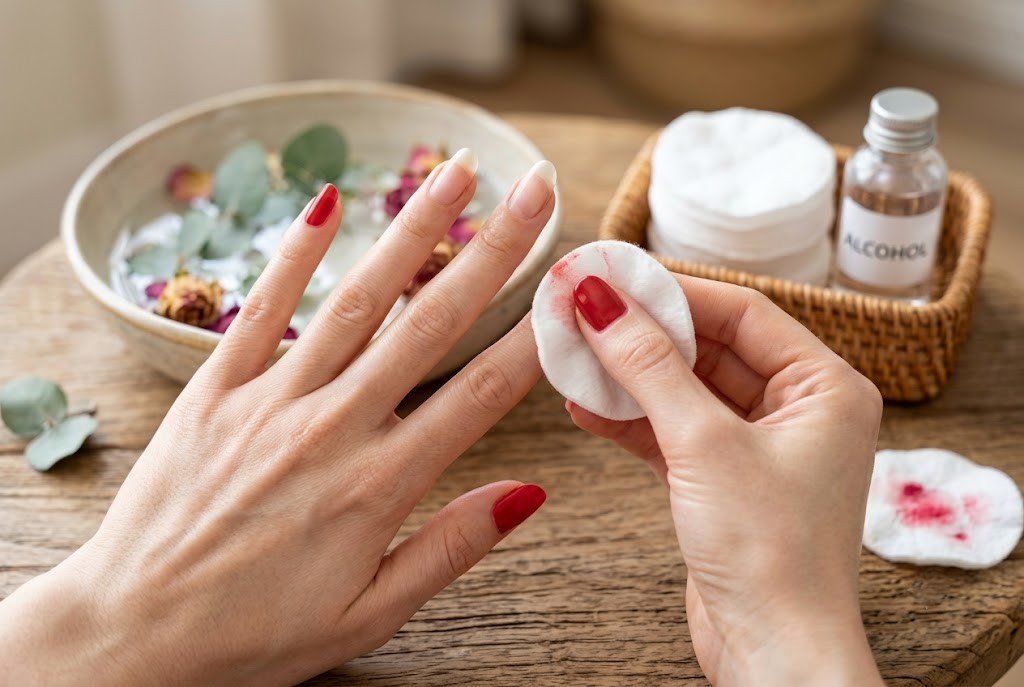
How to Remove Nail Polish Without Remover: 5 Home Methods
How to Remove Nail Polish Without Remover: Using 5 Things You Already Own
Quick Answer: You can remove nail polish without remover by rubbing alcohol, using hand sanitizer, toothpaste, or hairspray, and also by applying a fresh coat of polish. Take a cotton ball or pad saturated with your chosen method and then press it against the nail for 10 to 15 seconds, then wipe in one firm stroke. These nail polish remover alternatives take a little bit extra effort then acetone based remover, but they work best and get the job done.
You painted your nails three days ago, and now you need to remove the nail paint for a job interview, or you want a fresh color for a wedding, but you are out of remover. And now you just stand wondering if you have something available in the house that will do best in this job.
The good news is that you always have one of those things that genuinely performs. There are five real methods for how to remove nail polish without a remover, and all these use things that most people already have, including toothpaste, hand sanitizer, hairspray, or just a nail paint. This post will guide you through each step of these five methods and will explain how they actually work, along with tips to protect and take care of your nails afterwards.
In This Post
- Why You Might Not Have Remover And Why That’s Fine
- How Can You Take Nail Polish Off Without Remover? (5 Methods)
- Method 1: Rubbing Alcohol
- Method 2: Hand Sanitizer
- Method 3: Toothpaste
- Method 4: Hairspray
- Method 5: A Fresh Coat of Polish
- What Removes Nail Polish Best: An Honest Comparison
- Mistakes That Make Polish Harder to Remove
- How to Protect Your Nails After Any Remover-Free Method
- Frequently Asked Questions
Why You Might Not Have Remover And Why That’s Fine
Running out of nail polish remover is genuinely one of those small frustrations that feel bigger, but it’s not because you just have to work with a different toolkit.
Standard nail polish remover contains solvents like acetone or ethyl acetate that break down the polymer chains in nail polish and thus dissolve the color off the nail plate cleanly. But if you don’t have any nail paint remover, then you need something that can do the same chemical effect either perfectly or even imperfectly.
These five methods do the same thing and genuinely work, but none of them are quite as fast as acetone; rather, some require more patience. If you are working with regular nail polish on healthy nails, then every single one of them is truly capable of getting the job done right without demanding any additional effort. If you have sensitive skin and wonder about how to remove nail polish without acetone, or you prefer to avoid harsh chemicals like acetone on your nails, then several of these methods are genuinely good options and are worth keeping in your routine permanently.
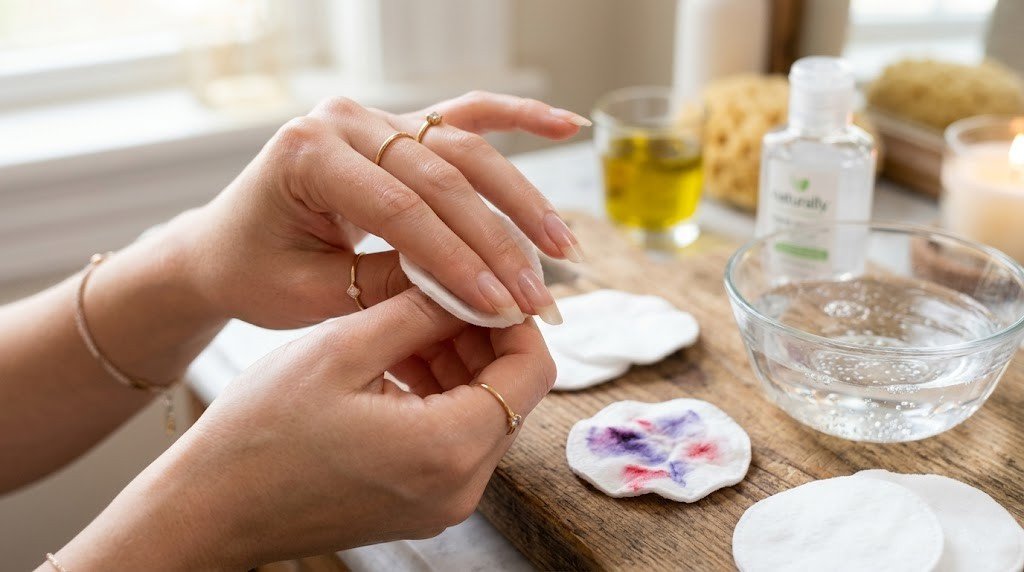
How Can You Take Nail Polish Off Without Remover?
All five of these methods use common household items that are already sitting in your cabinet, and all of them work through slightly different mechanisms. Starting with Method 1, which is most effective, work your way down the list and choose one according to what’s available.
Method 1: Remove Nail Polish with Rubbing Alcohol
Rubbing alcohol is the closest substitute to acetone that you have in your cabinet; nail artists confirm it works because isopropyl alcohol, which is a solvent that breaks down nail polish more slowly than acetone but meaningfully.
What you need: Cotton balls and Isopropyl rubbing alcohol (70% or higher).
How to do it:
- Saturate a cotton ball fully without sparing any part
- Press it firmly against each nail one by one and hold for 10 to 15 seconds each
- Wipe in one direction and do not press aggressively back and forth
- Repeat with a fresh cotton ball saturated with alcohol in case there is some color remaining
The 10-to-15-second press is the most important step, but most people skip it. The alcohol needs time to penetrate the nail paint and loosen the polish enough so it wipes away cleanly, so immediate scrubbing without giving time to solvent just smears the polish around.
Darker colors like navy, burgundy or black need two or three rounds, and it’s good to use a fresh cotton ball for each round in order to get the best results.
Method 2: Hand Sanitizer
Hand sanitizer works for the same reason as rubbing alcohol does, as it also largely contains isopropyl or ethyl alcohol. The gel formula actually helps here because it clings to the nail surface longer and gives the solvent more contact time to penetrate the polish.
What you need: Some cotton pads and an alcohol-based hand sanitizer (avoid the rare non-alcohol formulas.
How to do it:
- Apply a small amount of sanitizer directly onto the nail or onto a cotton pad
- Press and hold for 15 seconds, and work on one nail at a time
- Wipe firmly from the base of the nail toward the tip with the cotton pad
- Repeat as needed if some paint still remains on the nail
Hand sanitizer usually leaves a slight sticky residue on the nail, so rinse your hands thoroughly with warm water when you’re done. It’s a bit less effective than straight rubbing alcohol because the alcohol concentration in hand sanitizer is lower, and the gel base dilutes it slightly, but in a pinch, it genuinely works.
Method 3: Toothpaste
This one surprises people, but not when you know the science behind it. Toothpaste, particularly those with white paste formulas, has mild abrasives in the formula, like hydrated silica, that physically buff away the nail polish layer. It does not dissolve the previous two methods, but it scrubs them off, which means it works quite slowly but is more effective on thinner coats.
What you need: An old toothbrush and White toothpaste (paste, not gel).
How to do it:
- Apply a small amount of toothpaste to the nail on each nail one by one
- Scrub in small circles using an old toothbrush or your fingernail for about 30 to 60 seconds
- Wipe the nail clean with a damp cloth
- Repeat if there are stubborn spots on any nail
Gel toothpastes generally don’t work because they lack abrasive content, so classic white paste works better in this case. This method is the most nail-friendly among these five since it works without stripping away moisture from the nail plate like alcohol does, but it requires the most elbow grease.
Method 4: Hairspray
Hairspray contains alcohol as a primary ingredient, which has mild solvent properties, so it also works similarly to rubbing alcohol but is just more diluted. It’s not as efficient as alcohol, but it will work in case nothing else is available.
What you need: Cotton balls and Aerosol or pump hairspray.
How to do it:
- Spray a small amount of hairspray onto a cotton ball until it’s damp
- Press against the nail for 10 seconds
- Wipe firmly in one stroke
- Repeating this method usually needs more passes than the others
The main thing to watch here is that hairspray is sticky and you can feel it on your nails and the skin around, so rinse your hands thoroughly afterward and apply hand cream because the drying effect on the skin is noticeable. This one is the least efficient method on the list, but it does remove polish and works particularly well with lighter colors.
Method 5: A Fresh Coat of Polish
This is the one method that uses no solvent at all, and it genuinely works on fresh or lightly worn polish. The technique is simple: a new wet coat of nail polish reactivates and dissolves the dry layer underneath, and then whipping the fresh layer when it’s still wet will wipe the previous layer too.
What you need: Any nail polish (clear or colored) and a cotton pad
How to do it:
- Apply a generous coat of polish over the nail where you want to remove the previous layer
- While it’s still wet, within 5 to 10 seconds, press a dry cotton pad firmly against the nail
- Pull the pad away in one motion from the base towards the tip
- Repeat if any color remains on the nail
Timing is everything with this method because if you wait too long, then the fresh coat will also dry on the nail, and you will have another layer to deal with. Work on one nail at a time and move quickly. This method works beautifully on one or two-day-old polish, but it’s less effective on harder or older polish as the old layer is too rigid to be reactivated.
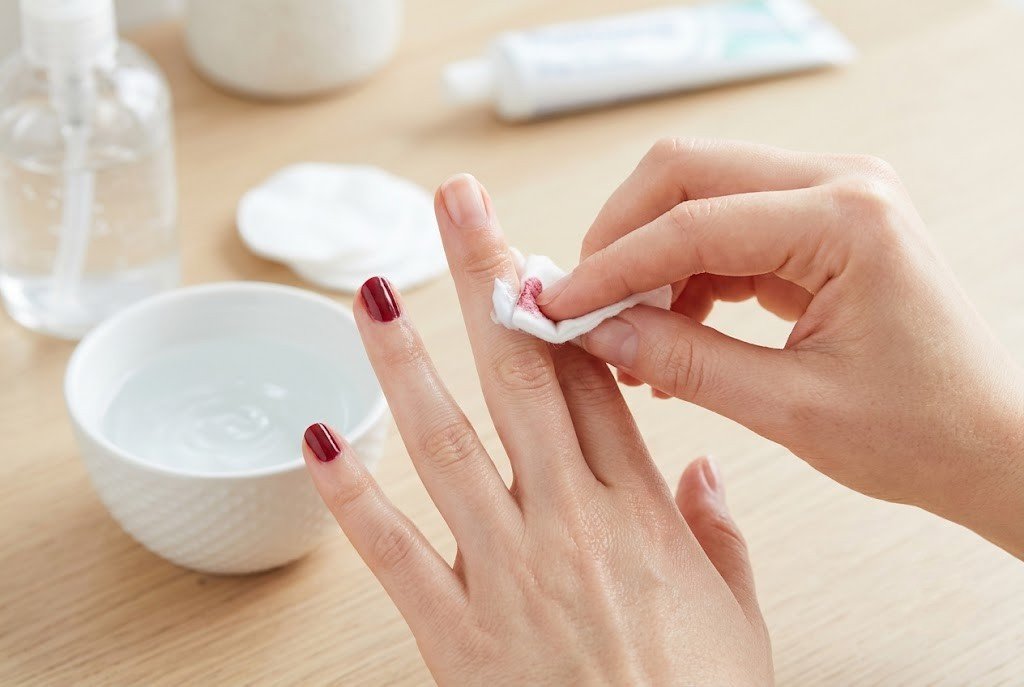
What Removes Nail Polish Best: An Honest Comparison
What no one tells you about acetone substitutes is that they are not equal, and expecting them to work as fast as acetone may set you up for frustration.
Ranked by effectiveness (regular nail polish):
- Best: Rubbing alcohol is fast, more effective, and widely available
- Second: Hand sanitizer is nearly as good but slightly more diluted
- Third: A fresh coat of polish is brilliant on new polish but limited on old
- Fourth: Toothpaste is slow but nail-friendly
- Fifth: Hairspray is the least effective and useful only when nothing else is on hand
None of these work reliably on gel nail polish because gel is cured under UV light and forms a much harder and chemically more resistant layer than regular polish. If you are dealing with gel nail polish, then you need acetone or a proper gel remover or a visit to a nail technician. Attempting these methods to scrub off gel can damage the nail plate and is not recommended.
It depends on whether you are working with regular polish, lacquer, quick-dry, or glitter, as all five methods will work with varying degrees of patience according to the product.
Mistakes That Make Polish Harder to Remove
Using alternatives to nail polish remover is already a little more work than acetone. These mistakes make it significantly harder.
- Not holding long enough. The biggest error across every method is less patience and wiping immediately. Solvents need enough time to penetrate the polish layer, so press and hold for a full 10 to 15 seconds before wiping every time and on every nail.
- Using a dry cotton ball. A lightly dampened cotton ball will barely touch the surface, so saturate it fully so the method works by actively making contact with the nail.
- Scrubbing back and forth. This spreads softened polish across the nail and surrounding skin rather than lifting it off cleanly from the nail. Always wipe in one direction starting from the base of the nail toward the tip.
- Trying these methods on gel polish. It won’t work, and the scrubbing required to try will thin the nail plate, which can damage the nail, so if it’s gel, then use a proper removal method.
- Skipping moisturizer afterward. Every method on this list, including the toothpaste method, removes some natural moisture from the nail and surrounding skin, so it’s good practice to apply cuticle oil or hand cream afterward to avoid dry and brittle nails with tight cuticles the next day.
How to Protect Your Nails After Any Remover-Free Method
Alcohol-based methods in particular can dry out the nail plate and the nail bed along with the surrounding cuticle tissue, but a two-minute recovery step makes a noticeable difference.
As soon as your nails are bare and nail polish is completely removed, apply a drop of cuticle oil to each nail and massage gently. In case you don’t have cuticle oil, then you can use a small amount of coconut oil or even olive oil. The goal is to replace the moisture the solvent pulled out of the nail and to keep the nail plate from becoming dry and brittle.
Follow that with a good hand cream and give your nails a day or two before having the next manicure, if possible, so your nail plate can benefit from breathing time between polish applications, and nails that have been cleaned with an alternative remover can feel slightly more porous than usual.
If you notice persistent dryness and brittleness on nails or peeling in the days after using these methods regularly, then it may be worth looking at your overall nail care routine. If you notice persistent dryness and brittleness on nails or peeling in the days after using these methods regularly, then it may be worth looking at your overall natural nail care routine.
Frequently Asked Questions About Removing Nail Polish Without Remover
Can rubbing alcohol remove nail polish?
Yes, rubbing alcohol is one of the most effective nail polish remover alternatives available at home. Isopropyl alcohol at 70% concentration or higher dissolves regular nail polish when held against the nail for 10 to 15 seconds before wiping. It won’t work on gel polish, and it can dry out the nail plate, so follow up with cuticle oil afterward.
Is nail polish remover just rubbing alcohol?
Not exactly. Standard nail polish remover contains acetone or ethyl acetate, both stronger solvents than isopropyl alcohol. Rubbing alcohol can remove polish but requires more time and repetition. Non-acetone removers sometimes use ethyl acetate instead of acetone, which is closer to alcohol in strength. They’re related but not the same thing.
What removes nail polish when you don’t have a remover?
Rubbing alcohol, hand sanitizer, white toothpaste, hairspray, and a fresh coat of nail polish can all remove regular nail polish without a standard remover. Rubbing alcohol is the most effective option, but none of these work on gel nail polish.
Can you remove nail polish without acetone?
Yes. If you prefer to avoid acetone, non-acetone removers using ethyl acetate are widely available. At home, rubbing alcohol is the best acetone-free option. Toothpaste is the gentlest. For gel polish, however, acetone remains the most reliable removal method; non-acetone alternatives rarely penetrate the cured gel layer effectively.
What is a good nail varnish remover substitute in a pinch?
Hand sanitizer is the most practical nail varnish remover substitute for most people, as it’s in most bags and bathrooms. Apply it to a cotton pad and press firmly against the nail for 15 seconds, then wipe clean. It’s not as fast as acetone, but for regular polish, it removes color effectively without requiring a separate product.
Bare nails were never meant to require a special trip to the store because at least one method, like rubbing alcohol, hand sanitizer, toothpaste, hairspray, and a spare bottle of polish, is probably within arm’s reach right now. The key is patience, so just hold, don’t scrub, wipe clean, and always follow up with moisture.
Whether you need a quick fix tonight or you’re building better habits around your nail care, knowing how to remove nail polish without remover is one of those small skills that always comes in handy.
Once your nails are bare and recovered, if you’re thinking about building a real routine that keeps your nails strong and healthy between manicures, that’s worth doing properly.