Now Reading: Dip Powder Nails: What They Are, Pros, Cons & How Long They Last
-
01
Dip Powder Nails: What They Are, Pros, Cons & How Long They Last
Dip Powder Nails: What They Are, Pros, Cons & How Long They Last
Dip Powder Nails: Pros, Cons, and How Long They Really Last
Quick Answer: Dip powder nails are a long-lasting manicure technique where pigmented acrylic powder is layered onto the nail on a bonding base coat and then sealed with an activator without requiring a UV lamp. Correctly done dip nails typically last three to four weeks with proper care. They are more durable than regular polish and more long-lasting than gel, but the removal process requires significant care to protect your natural nail plate.
There is something genuinely appealing about a manicure that lasts for weeks without a single chip, since you just keep up with your routine without worrying about how your hands look. No touching up or peeling corners by day five; instead, just clean and polished nails that hold up through everything, including dishes, typing, and daily gym sessions. Dip powder nails have built their reputation on this promise, and it genuinely delivers this for a lot of women. But there are also a lot of questions about this technique, like Is it actually better than gel? Is it damaging your nails? Is it worth the price?
This post answers all of these very plainly, and reading all the way through this post, you will learn exactly what dip powder nails are, how the process works, how long they genuinely last, and why that number varies with an honest look at the benefits and the drawbacks. By the end of this post, you will know whether dip powder nails are the right choice for your nails and your lifestyle.
In This Post
- What Are Dip Powder Nails, Exactly?
- How the Application Process Works
- How Long Do Dip Nails Last and What Affects It
- The Real Pros of Dip Powder Nails
- The Real Cons of Dip Powder Nails
- Is Dip Powder the Same as Acrylic?
- What Is SNS? Is It the Same as Dip Powder?
- Is Dip or Gel Better for Your Nails?
- When to Talk to a Dermatologist About Your Nails
- Frequently Asked Questions About Dip Powder Nails
What Are Dip Powder Nails, Exactly?
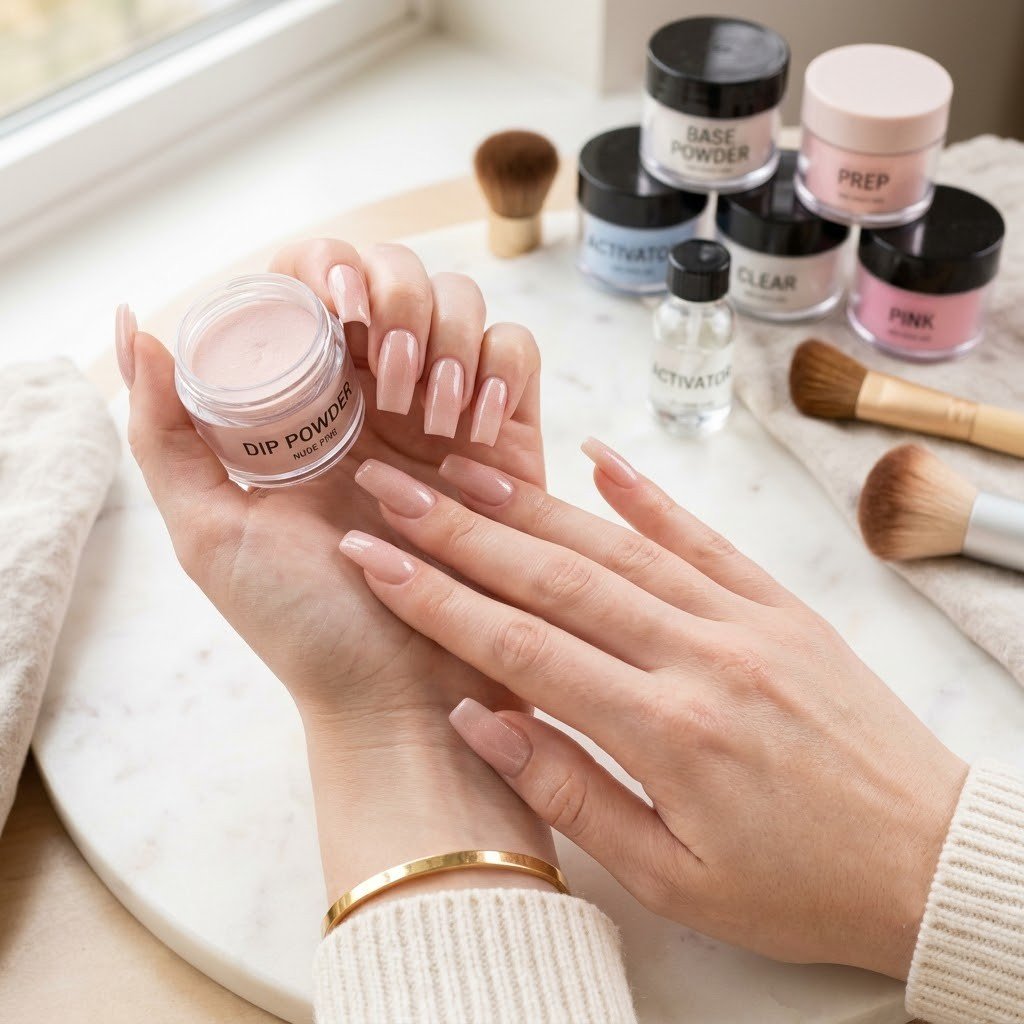
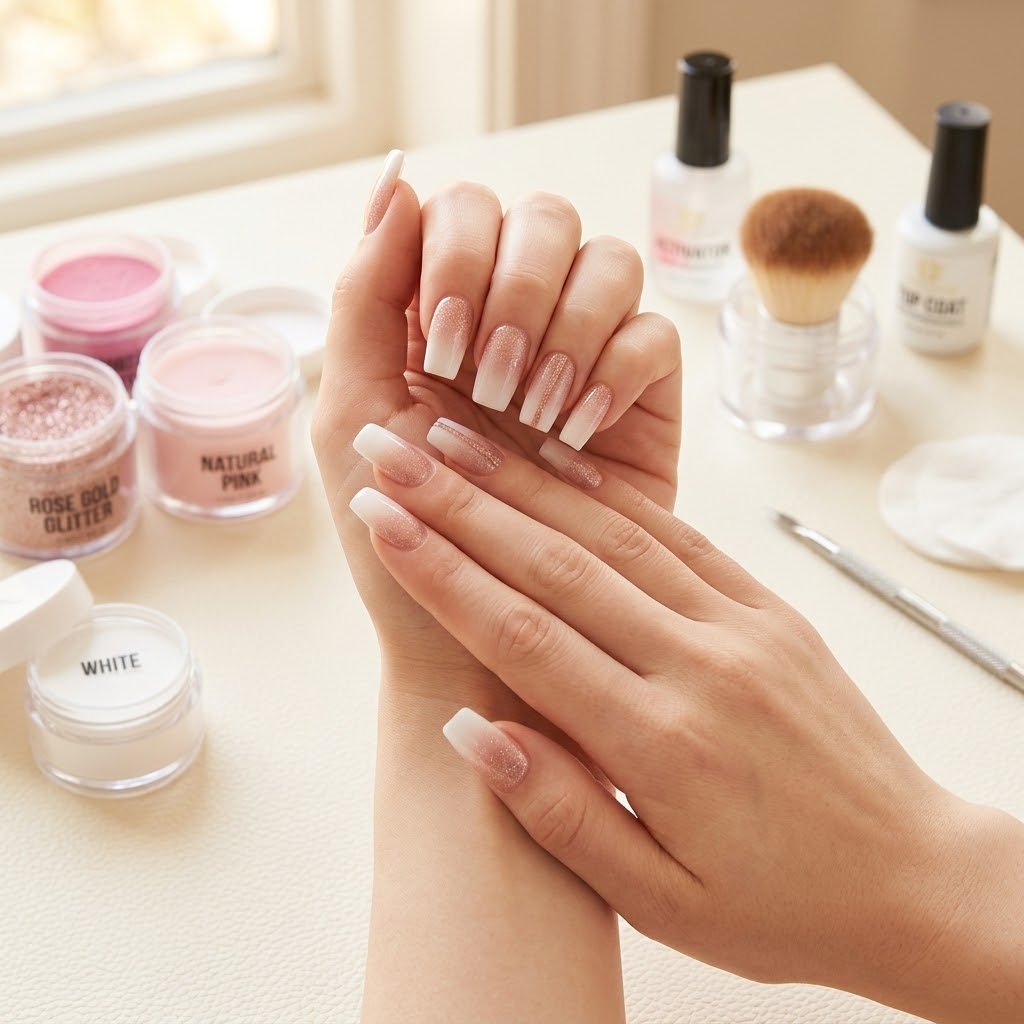
Dip powder nails are a type of manicure where color comes from finely milled pigmented powder rather than any liquid paint. A bonding base coat is applied to the nail, and instead of painting anything onto the nail, the finger is literally dipped into a jar of colored powder. That process is repeated in layers, and a liquid activator is applied to harden everything with a top coat as a final seal on powder layers.
The result is a firm coating that sits on top of the natural nail plate, which looks much closer to a natural nail in appearance than thick acrylics, but still provides more structure than gel. No lamp or UV light is required in this process; rather, an activator cures the powder chemically, and that’s the reason dip powder nails became popular among women who worry about exposure to LED and UV from gel systems.
The powder itself is an acrylic-based compound containing fine-milled polymers that bond and harden when the activator makes contact with them, and this chemistry gives dip nails their signature durability.
How the Application Process Works
Understanding the process matters because it directly affects how long your dip manicure will last and how much it will stress your natural nails.
Nail prep comes as the first and most important step that decides the durability of your dip nails. The nail plate is lightly buffed to remove oils and then filed gently to push back the cuticle. Afterwards, the nail is cleaned with a dehydrator or alcohol.
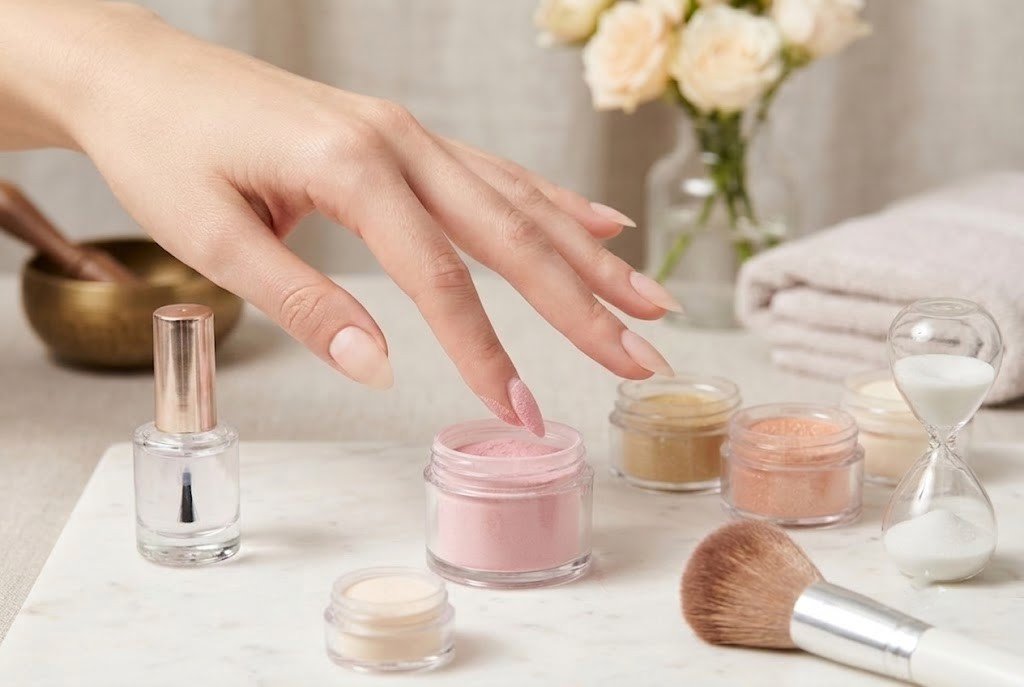
Base coat and dipping follow. A thin bonding liquid is brushed on, and while it’s still wet, the finger is immediately dipped into the powder at roughly a 45-degree angle. Excess powder is tapped off, and this step repeats two to three times until a thin layer of color and structure is built.
The activator is then applied generously across the entire nail surface to trigger a chemical reaction that hardens all the powder layers into a solid coating. Too thin a layer of activator will not significantly harden the powder layers, so apply correctly to create that signature dip nail firmness.
Filing and finishing smooth any uneven texture, and a top coat as the final step to seal the surface and to add the glossy finish most people associate with a professional dip manicure.
How Long Do Dip Nails Last and What Affects It
The honest answer remains three to four weeks for most people, with real variation on both sides, as everyone has a completely different routine and lifestyle.
Women with naturally strong nails who do careful prep and avoid prolonged water exposure can push past four weeks. Factors like poor prep, thin activator coverage, or a lifestyle involving heavy hand washing or cleaning chemicals can cut that down to two weeks.
The variables that matter most:
- Nail prep quality. Oily nail plates reject dip powder, and even a small amount of moisture from any source before application causes premature lifting.
- Activator coverage. Uneven activators make the surface look fine, but the powder layers never fully harden and chip faster.
- Water exposure. Prolonged soaking weakens the bond. The nail plate expands slightly on absorbing water and creates micro-separation between the powder and the nail.
- Cuticle oil use. Daily cuticle oil contributes to long-lasting dip nails by keeping the surrounding skin healthy and preventing cracking at the edges.
A well-applied set should reliably hit three weeks or even four weeks is achievable but beyond that, the natural nail growth at the base causes chipping.
The Real Pros of Dip Powder Nails
Durability that holds up in real life. The layered structure of dip powder nails is genuinely tough to resist impact and bending better than gel, and this makes it a strong choice for women who work with their hands or struggle with gel lifting.
No UV or LED lamp required. The activator cures the powder chemically with no light exposure at all, so women concerned about repeated UV exposure from gel curing lamps genuinely find this technique meaningful.
More natural-looking than acrylics. Layers build gradually and stay thin, providing a clean, natural look not thick or artificial.
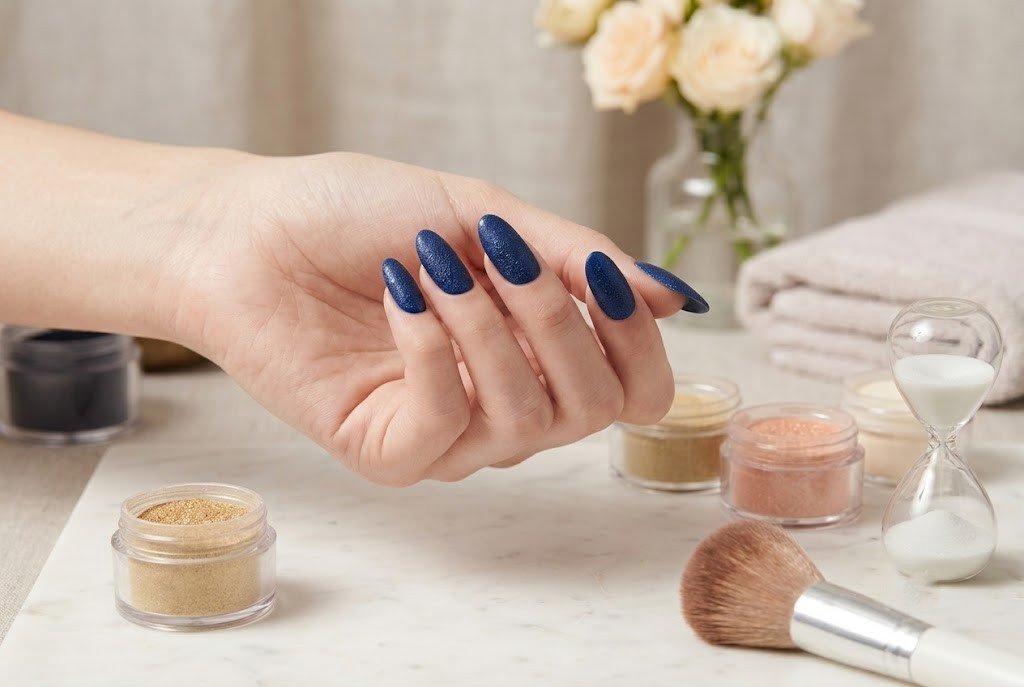
Wide color range. Dip powders come in hundreds of shades and work beautifully for ombre effects, glitter layering, and nail art without adding bulk.
The Real Cons of Dip Powder Nails
Removal is where the damage happens. The biggest risk with dip nails is not the application, but it is the removal process. The correct method is to soak in acetone for 10 to 15 minutes and gently push off the softened powder without forcing the powder off. Peeling the powder pulls layers of the nail plate with it, leaving nails thin and weakened. This is the side effect of dip powder nails that matters most but gets mentioned least.
Repeated use thins the nail plate over time. Cleveland Clinic notes that the buffing before each application removes a thin layer of the nail plate’s surface, and repeated buffing means cumulative thinning, which weakens the nail matrix’s ability to produce strong and healthy keratin. Nails that are never given a break may become noticeably thinner and more flexible.
Hygiene risk with shared jars. Double-dipping from the same powder jar in salons creates a real cross-contamination risk. A responsible nail technician pours powder into a separate disposable container for each client.
Allergic reactions are possible. Some people develop sensitivity to the cyanoacrylate adhesives in the bonding base coat. According to the American Academy of Dermatology, reactions can appear hours or days after application and may include itching or swelling with redness around the nail fold so it’s preferred to test one nail first is a sensible precaution if you have sensitive skin.
Is Dip Powder the Same as Acrylic?
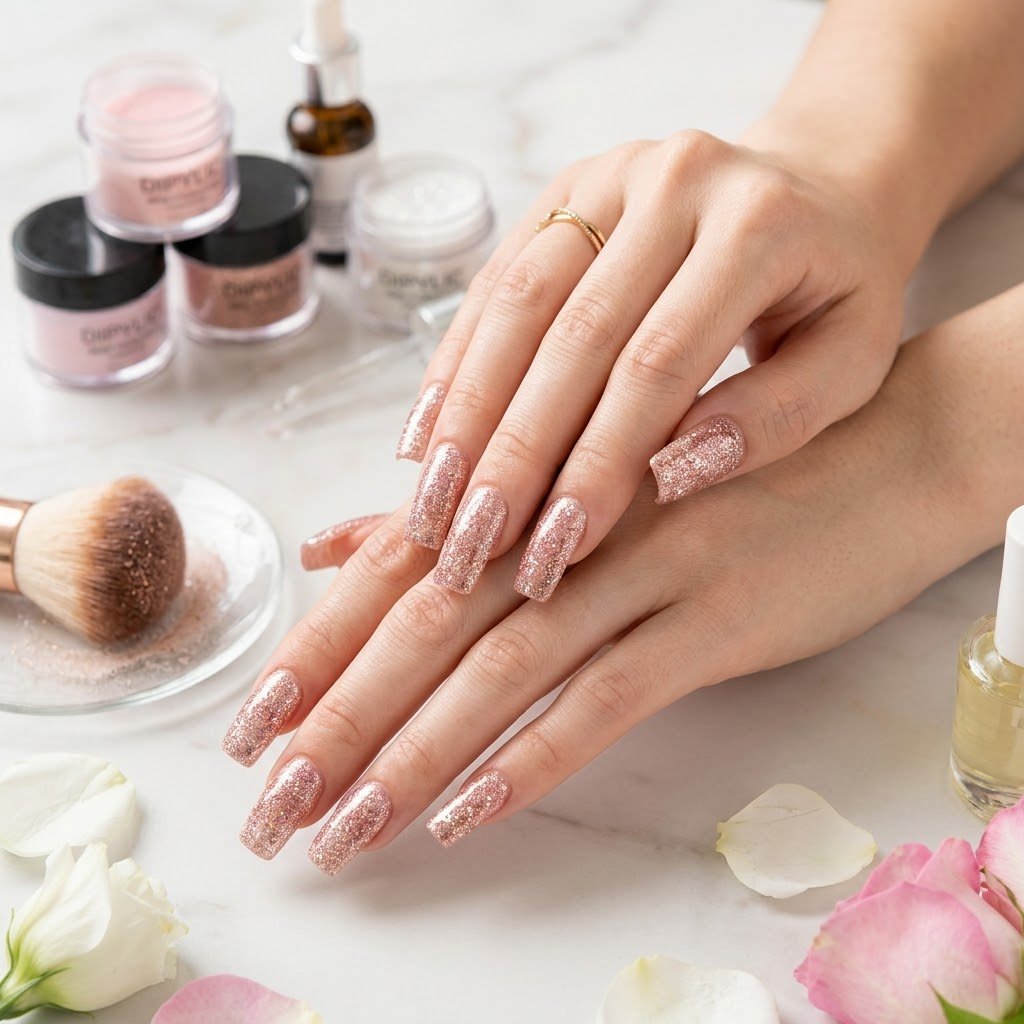
Technically, no, though they both share the same chemistry and use acrylic polymer compounds as their base, but how these compounds are activated is totally different.
Traditional acrylics combine a liquid monomer with powder polymer at the brush and give the technician time to sculpt before it hardens. Dip powder uses a pre-mixed polymer activated by the bonding liquid and activator separately without involving sculpting.
Dip powder nails sit closer to acrylics than to gel in hardness and structure, but they are thinner with a more natural look and require no sculpting. They are not interchangeable, as acrylic powder and dip powder behave very differently and should never be substituted for each other.
What Is SNS? Is It the Same as Dip Powder?
SNS stands for Signature Nail Systems, a specific brand of dipping powder that became so popular that it turned into a synonym for the whole technique, the same way people say Kleenex for any tissue. SNS nails and dip powder nails are the same process, but the difference is brand versus category.
SNS markets its powders as containing vitamins and calcium, positioning the system as nail-strengthening, and there is debate about whether those nutrients genuinely benefit the nail plate through topical application. What is accurate is that the application and removal process for SNS is identical to any other dip system.
Is Dip or Gel Better for Your Nails?
Neither is universally better; it comes down to your nail health and your lifestyle.
Gel is more flexible and gentler on thinner or more brittle nails that might crack under dip powder’s rigidity. Gel removal is also slightly faster and less harsh when done correctly. On the other hand, dip powder nails last longer on average with no exposure to UV light and resist impact better, which makes them the stronger choice for active lifestyles or nails prone to gel lifting.
If you have thin or damaged nails, then start with gel, where dip powder delivers better for strong nails that need maximum longevity.
When to Talk to a Dermatologist About Your Nails
Most people wear dip powder nails without any issues beyond normal wear, but a few signs are worth taking seriously.
Persistent redness, swelling, or itching around the nail fold after a dip manicure may be a sign of an allergic contact reaction to the adhesives. If your nails have become noticeably thinner, peel in layers, or feel painful after removal means your nail plate needs recovery time before the next set. And if you notice discoloration, unusual texture changes, or the nail lifting from the nail bed without an obvious cause, then see a professional. These can occasionally signal a nail infection or an underlying health issue that nail products can mask.
Dip powder nails are one of the more reliable manicure options for women who want real longevity without UV exposure. Go in with honest lifespan expectations of three to four weeks of wear, careful removal every single time, and breaks between sets to let the nail plate recover. The removal step deserves just as much attention as the application itself, so make sure to get that right, and your natural nails stay healthy underneath every set.
If you want to make sure your nails are strong enough to handle regular manicuring wear, read up on how to strengthen your nails before your next appointment.
Frequently Asked Questions About Dip Powder Nails
Is dip bad for your nails?
Dip powder nails are not inherently damaging; the removal process is where most harm occurs. Peeling or forcing off the powder pulls layers of the nail plate with it. Correct removal using an acetone soak and gentle pressure keeps the nail plate intact. Regular breaks between sets help maintain long-term nail strength.
Can you fill dip nails?
Yes, though it is less straightforward than acrylic fills. A fill involves filing down the grown-out area, applying fresh base coat and powder to the new growth, then re-sealing the full nail. Many nail techs prefer full removal and reapplication every three to four weeks since fills can create uneven thickness if not executed carefully.
Is dip powder the same as acrylic powder?
They share acrylic chemistry but are not the same product. Acrylic powder needs a liquid monomer and must be sculpted before it hardens. Dip powder is activated by a bonding liquid and activator with no sculpting required. The two cannot be used interchangeably.
How do you remove dip powder nails at home?
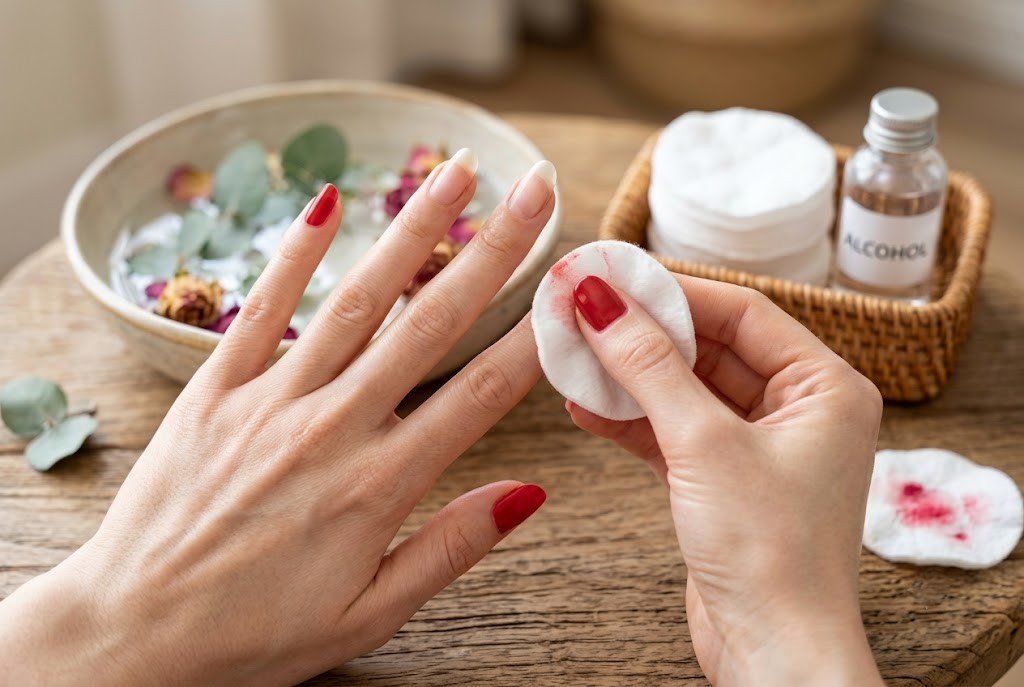
Buff off the top coat layer first to break the seal. Place a soaked cotton pad in pure acetone on each nail, and wrap with foil for 10 to 15 minutes. The same method is used for gel removal, with the same patience required. Gently slide off the softened powder with a cuticle pusher; never peel or force it. Finish with cuticle oil on every nail to restore moisture.
How long does dip powder last compared to regular polish?
Regular polish typically lasts five to seven days before chipping. Dip powder nails last three to four weeks or roughly four to five times longer. That durability comes from the layered acrylic powder structure and chemical hardening, which creates a coating regular polish simply cannot replicate.