Now Reading: French Tip Nails: Styles, Types & How to Do Them at Home
-
01
French Tip Nails: Styles, Types & How to Do Them at Home
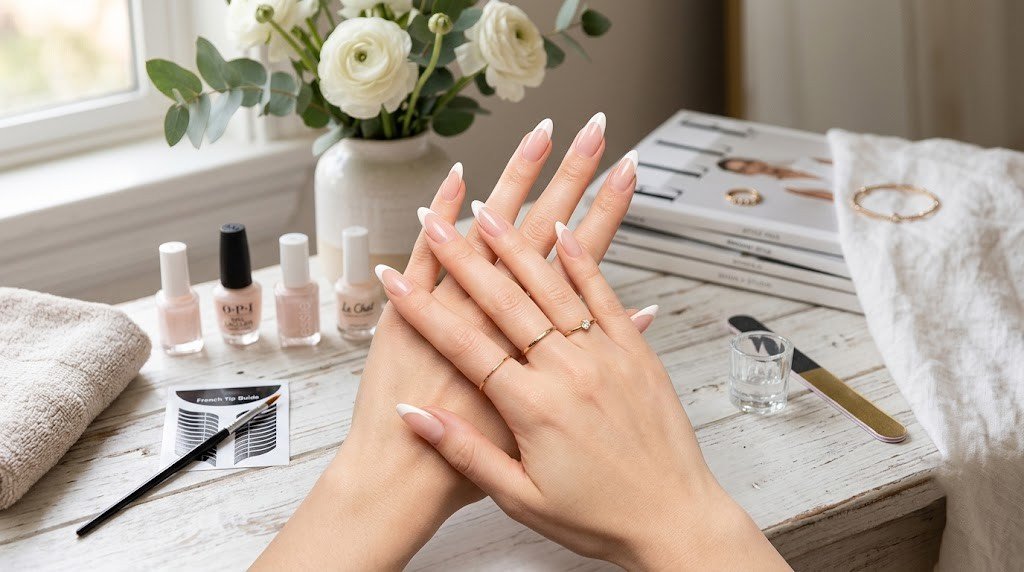
French Tip Nails: Styles, Types & How to Do Them at Home
French Tip Nails: Every Style, Shape & How to Do Them Yourself
Quick Answer: French tip nails feature a natural nude base with a free-edge tip of the nail painted white or colored. They have a broad style range from classic white to colored French tip nail designs, micro lines, and ombre shades. French tip nails can be done easily at home with little patience and the right tools.
Seasonal trends come and go like chrome, jelly, and abstract nail art, but the French tip nails just remain at the top season after season with every nail shape and for any occasion, either a normal Monday morning or a special wedding day. They are not done by accident, but it is the rare nail look that feels polished and effortless, and that’s the reason why women keep coming back to it.
This post covers everything, including what French tip nails actually are, major styles worth knowing right now, and a complete step-by-step guide to doing French tips at home even without any professional help. If you are a total beginner or you have tried ending up with wobbly lines before, this post will tell you exactly what to do differently.
In This Post
- What Are French Tip Nails?
- French Tip Nail Styles: Every Look You Need to Know
- How to Do French Tips at Home
- American Manicure vs French: What’s the Difference?
- Mistakes That Ruin a French Manicure
- Frequently Asked Questions About French Tip Nails
What Are French Tip Nails?
French tip nails are one of the most misunderstood in terms of where they actually came from yet the most recognizable nail looks in the world.
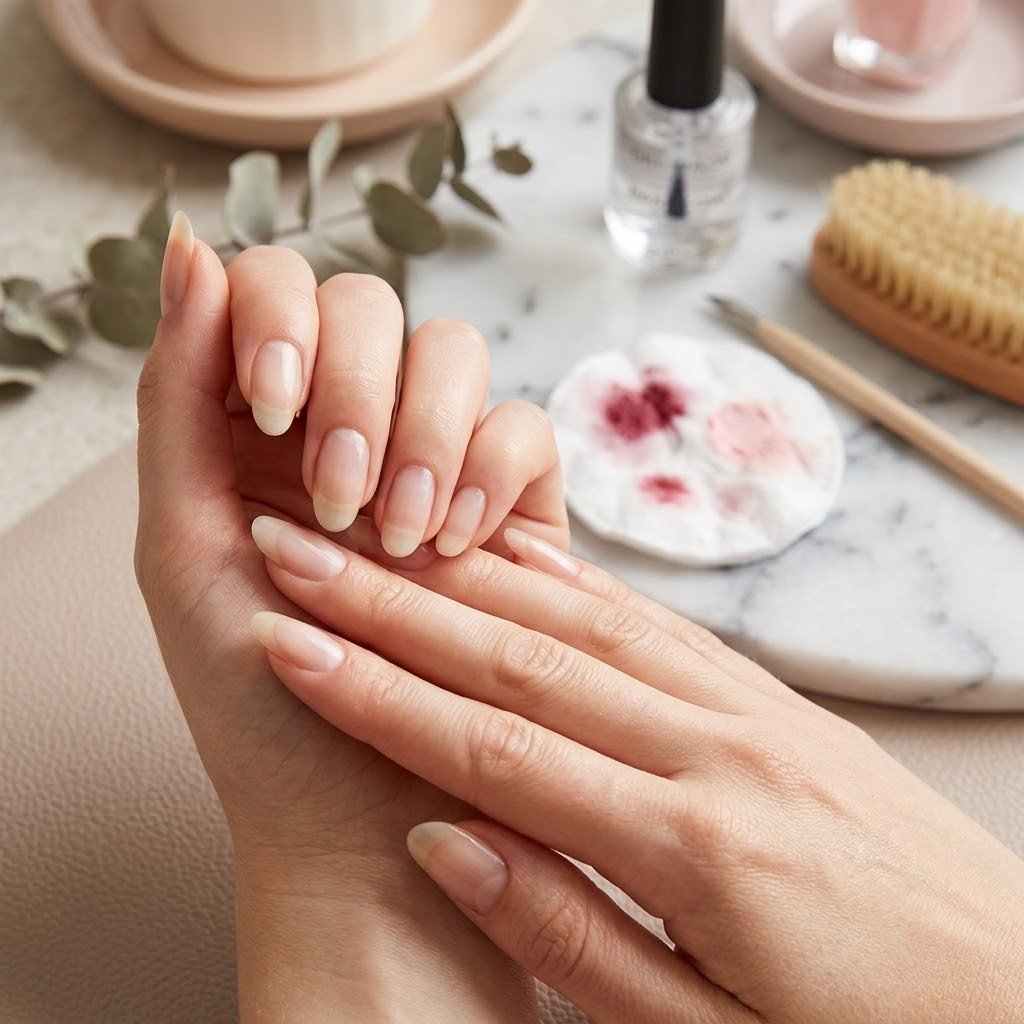
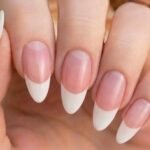
The style features a classic and traditional sheer or nude base with a white line painted along the tip of the nail. That contrast between the soft base and the bright tip is the whole idea. It makes the nail feel healthy, well-grown, and sharper, cleaner, and more intentional.
French tip nails are misunderstood by their name, but actually, they did not originate in France. In the 1970s, Hollywood by Jeff Pink, who was the founder of the nail brand Orly, developed the look. He actually needed a versatile nail style that would work across multiple costume changes on film sets. During the 1980s and 1990s, it became a salon staple and was seen on every red carpet imaginable, and never really left then.
The flexibility of French tip nails is what makes them enduring. It works on all short nails, long nails, coffin, almond, square, and oval nails. And their fresh versions go far beyond the original white-on-nude formula.
French Tip Nail Styles: Every Look You Need to Know
The French tip has evolved a lot from the 1990s thick white stripe acrylic set. Below is every major style that’s worth knowing.
Classic White French Tips
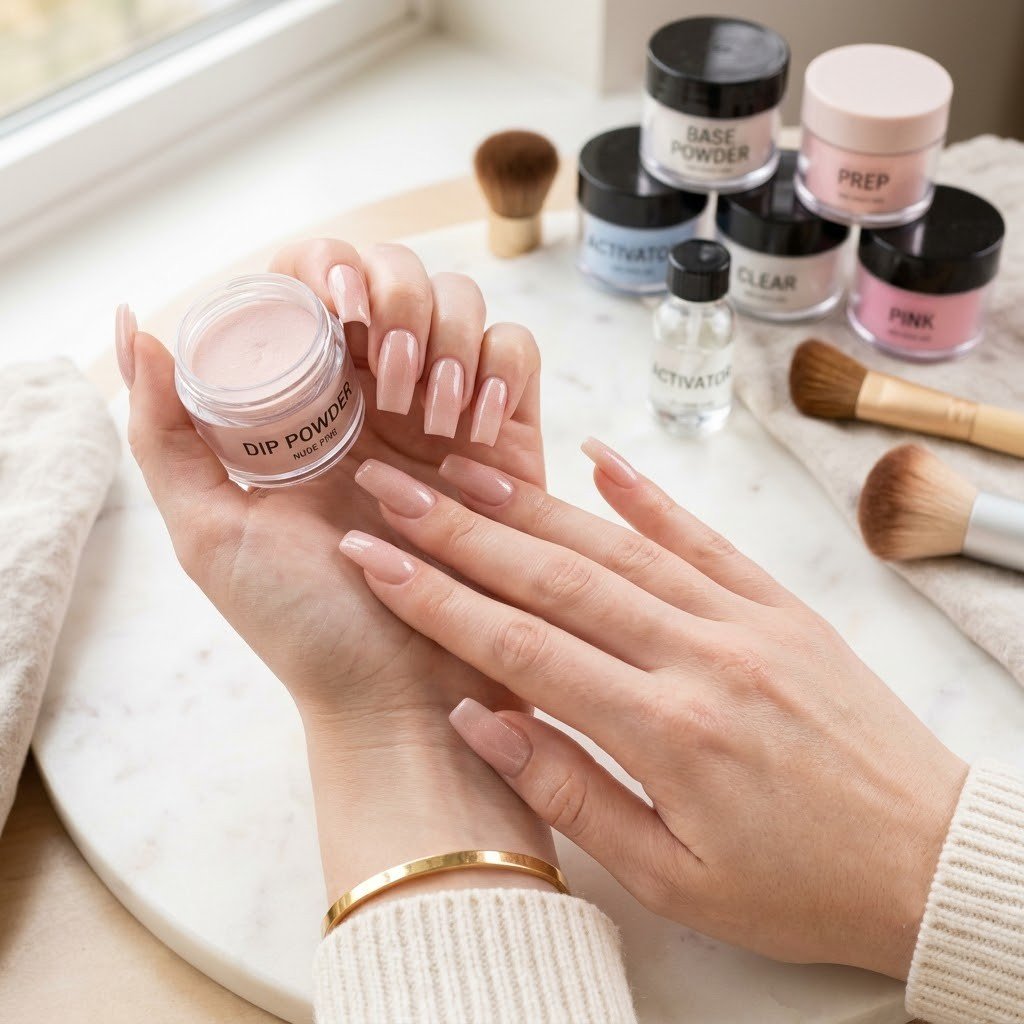
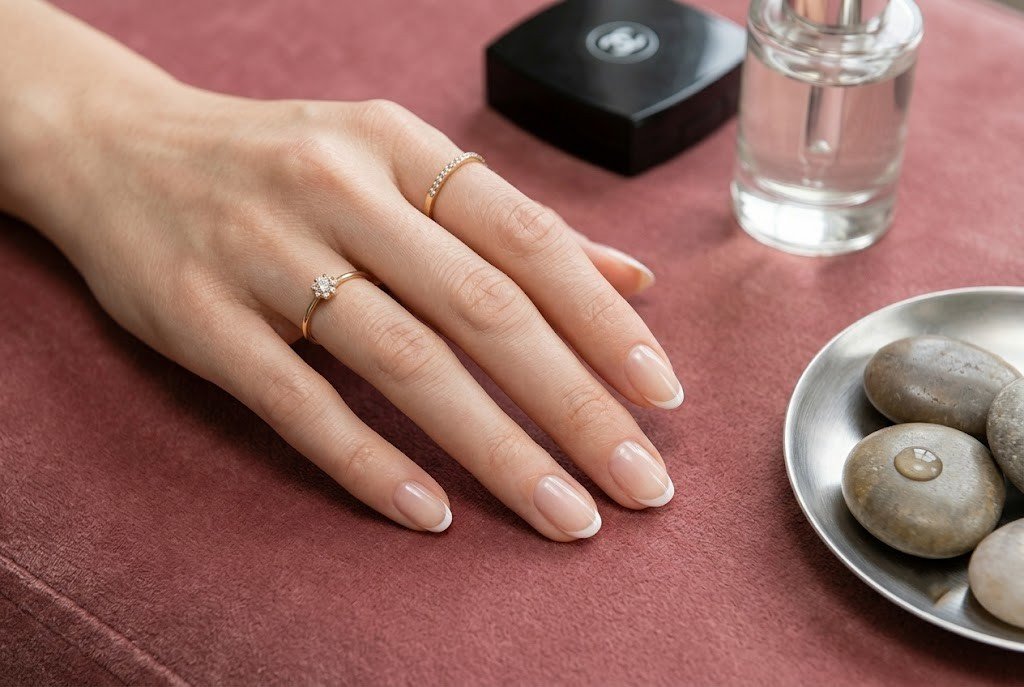
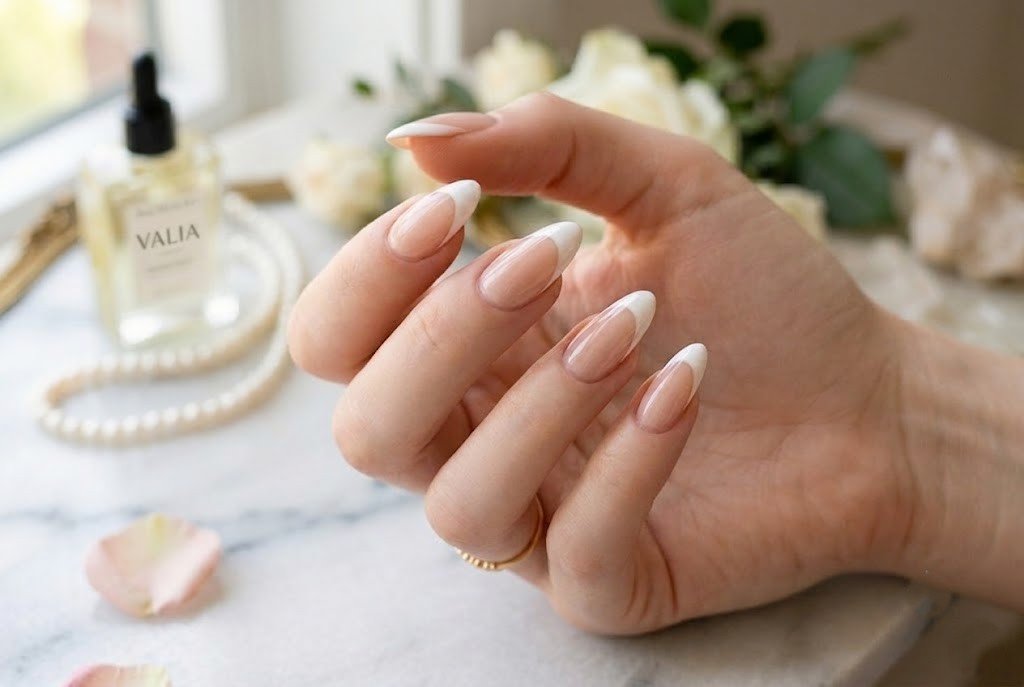
This one is original sheer pink or nude base, crisp white tip, clean line. This sits smoothly on every nail length and every skin tone, and that’s why it has never once been truly out of style. The tip width may vary from thinner lines that read as more modern and minimal to wider tips leaning more traditional. In both ways, the classic white French tip remains the most requested salon look for a reason.
Colored French Tip Nails
Colored French tip nail designs are the biggest evolution of the style in recent years. You use any color at the tip instead of white, like red, black, navy, sage green, lavender, deep burgundy, or soft yellow. This design has colored tips with a neutral base. This single transforms the look from classic to completely modern. Particularly red French tips are currently in the spotlight; they appear across our fall nail ideas collections too, proving they translate seamlessly into autumn palettes.
Micro French Nails
Micro French nails take the tip line down to a very thin line, like a white or colored hairline stripe right at the very edge of the nail. It is muted enough that some people will not register it as a French tip at all, and that’s kind of the point. For a formal environment, micro French is perfect for anyone who loves the idea of nail detail but cannot have bold nails. The September nail ideas collection has several examples of how quietly this style wears.
French Tip Ombre Nails
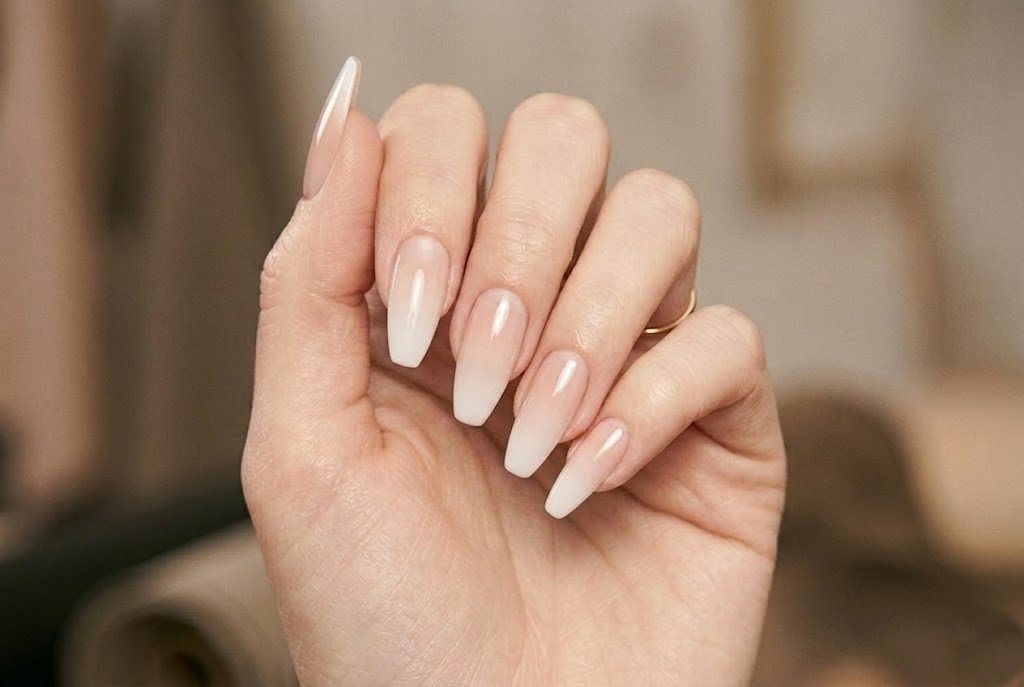
French tip ombre nails fade from the base color into the tip color gradually, not as a hard line. The soft and blurred transition feels like a more forgiving technique than a sharp tip line, and this makes it genuinely easier to execute at home. The most popular combinations are white-to-nude and pink-to-white, though colored versions, lilac to white, peach to champagne, can be seen everywhere now.
French Tips by Nail Shape
The nail shape entirely changes the look of French tips. If you need a refresher on filing each shape correctly before you start painting, it’s worth doing first.
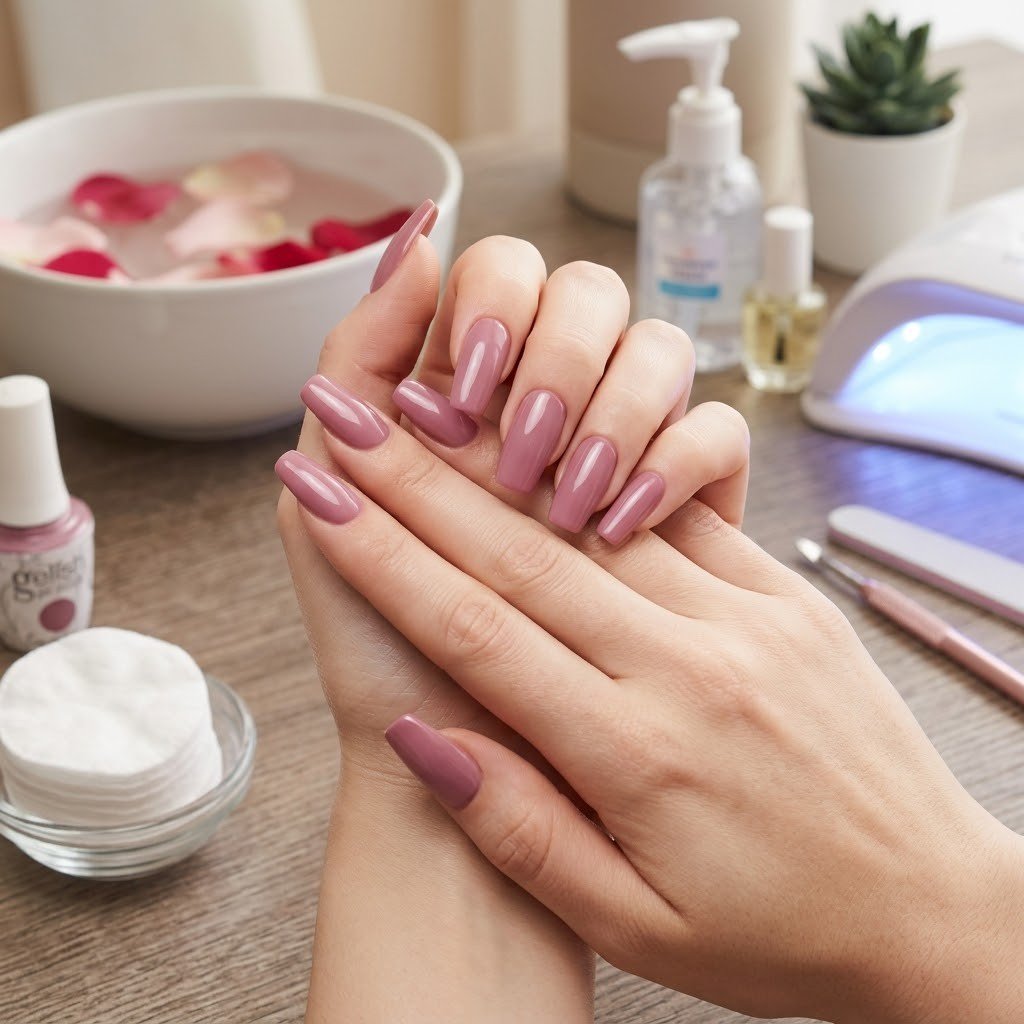
French tip nails coffin style uses the long and flat-ended coffin shape, creating a dramatic and fashion-forward look. The tip line following the straight edge of the coffin tends to be worn with colored or chrome tips rather than plain white.
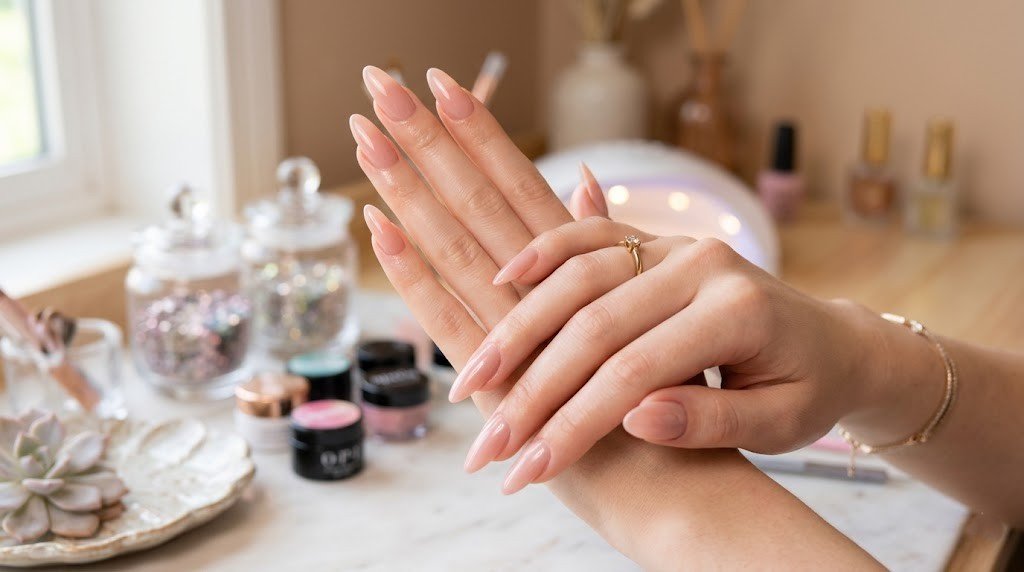
Oval French nails soften the look considerably. The curved tip line mirrors the rounded nail edge and gives a vintage feel that suits the classic white style particularly well.
Square French nails have the sharpest and most graphic result. A perfectly straight tip line runs across a flat nail edge, making it feel clean, modern, and very satisfying when done well.
Short French tips are underrated. A thin white or colored tip line on a neat short nail gives an incredibly clean and professional look, and it’s far easier to maintain than a longer set.
How to Do French Tips at Home
Here’s the section you probably have come for. The good news is that French tip nails at home are genuinely achievable, but they require patience on the first attempt. Below are the steps for exactly how to do it.
What You Need Before You Start
Not too much is needed; just gather these before you begin:
- A base coat: It protects your natural nail, helping the polish to adhere evenly
- A sheer nude or pink nail polish: Choose your base color
- A white nail polish: for the tips (a formula with a thin, precise brush helps enormously)
- Nail tip guides or stickers: It’s optional but genuinely helps if you’re a beginner.
- A thin nail art brush or striping brush: if you are freehanding the tip line
- A fast-dry top coat: It adds the glossy finish and seals everything.
- A small cleanup brush and acetone for correcting any uneven lines after
If you are using press-on French nails, then skip to the section below. Press-ons have their own process.
Step-by-Step: How to Paint French Tips
Step 1: Prep your nails. File nails to the preferred shape, gently push back cuticles, and buff the nail surface lightly. Clean off any dust with a lint-free wipe. If your nails are on the oilier side, swipe them with a little acetone first because polish does not adhere well to oily nails. If you want the full prep breakdown before painting, our complete at-home manicure guide covers every step, including the dehydration step most guides skip.
Step 2: Apply a base coat. Apply one thin coat across all nails and let it dry completely without rushing.
Step 3: Apply your base color. Over base, apply two thin coats of your nude or sheer pink and let each coat dry before adding the next. These coats are your canvas, so they need to be smooth.
Step 4: Create the tip line. This is where most people feel nervous. You have two options:
Smoothly place a nail tip guide sticker along the smile line of your nail and press it down firmly at the edges, then paint your white polish over the tip in one or two strokes. When done, peel the sticker off while the polish is not fully dry but still slightly wet for the cleanest edge.
If you are freehanding, then take a thin brush and load it with white polish and draw the smile line from one side of the nail to the other in a single smooth stroke. Work on one nail at a time and go slower when your non-dominant hand feels awkward.
Step 5: Clean up the edges. Run an acetone-dipped small brush or a pointed cotton bud across the uneven edges of the nails. Never skip this result; it alone is what separates a clean result from a messy one.
Step 6: Seal with top coat. Apply one generous coat over the entire nail to cover the tip line. This locks in the white, preventing chipping, and gives the high-gloss finish that makes French tips look salon-done.
How to Do French Tips Without Guides
If you want to skip the stickers, you should have a grip brush rather than a steady hand. Prefer a stripping brush over a standard nail brush. Too much polish causes bleeding, so load the brush lightly. Rest your painting hand on a flat surface and move from your elbow, not your wrist. Remember that the cleanup brush does most of the real work anyway. Freehand the line close to what you want and then refine it with acetone. That is how it is actually done.
How to Do French Tips With Press-Ons
Press-on French manicures have transformed dramatically, having a massive glow-up. Current quality press-ons with a built-in French tip design are genuinely hard to distinguish from a fresh set at moderate distance.
Select your size for each finger before you begin. Clean your natural nails with alcohol and apply the adhesive tab or nail glue to your natural nail, not to the press-on. The same sizing and gluing principles apply here as with any pre-shaped nail tip. Press firmly for 30 seconds per nail and do not expose to water for at least an hour. A good set lasts five to seven days with normal wear if it is applied properly.
American Manicure vs French: What’s the Difference?
The answer to this commonly asked question is simpler than most people expect.
A French manicure uses a white tip, which is usually a bright and opaque white over a sheer pink or nude base. The contrast between tip and base is visible and intentional with a defined look.
An American manicure is softer. The tip uses an off-white or cream tone rather than bright white, and the base is more peach or ivory than cool pink and tends to be slightly warmer. The overall effect is more natural and less graphic. Where a French manicure says “done nails,” an American manicure says “really healthy natural nails.”
Neither is better; instead, they both suit different preferences and different skin tones. The American manicure tends to be more flattering on warmer skin tones, where the classic French reads crisply on cooler ones. Both are enduringly popular and can be done at home with the same basic technique.
Mistakes That Ruin a French Manicure
Painting the tip line too thick. A wide white tip looks dated immediately. Modern French tips are thinner than you think, with the thickness added if you need.
Skipping the cleanup step. If you paint the tip line slightly uneven and think it is good enough, then you are wrong. It takes almost sixty seconds to clean the edges with acetone, and it changes the result completely.
Applying the top coat too late. If your white tip polish has fully hardened before you add the top coat, then use the brush to drag and streak across the tip line. Apply the top coat while the white is dry to the touch but not rock hard. It usually takes five to ten minutes after painting the tip.
Using the wrong white polish. A thick, goopy white polish is almost impossible to control on a tip line. You want a fluid and self-leveling white with a thin brush. Test the consistency on paper before applying it to your nails, and notice if it flows or drags; prefer the flowing one.
Rushing the base color. Applying tip polish over a base that is not fully dry causes smearing and bubbling underneath the tip line. Give your base coats a full two to three minutes each. The reality is that the whole process takes longer than you want it to, and that’s how it’s done properly.
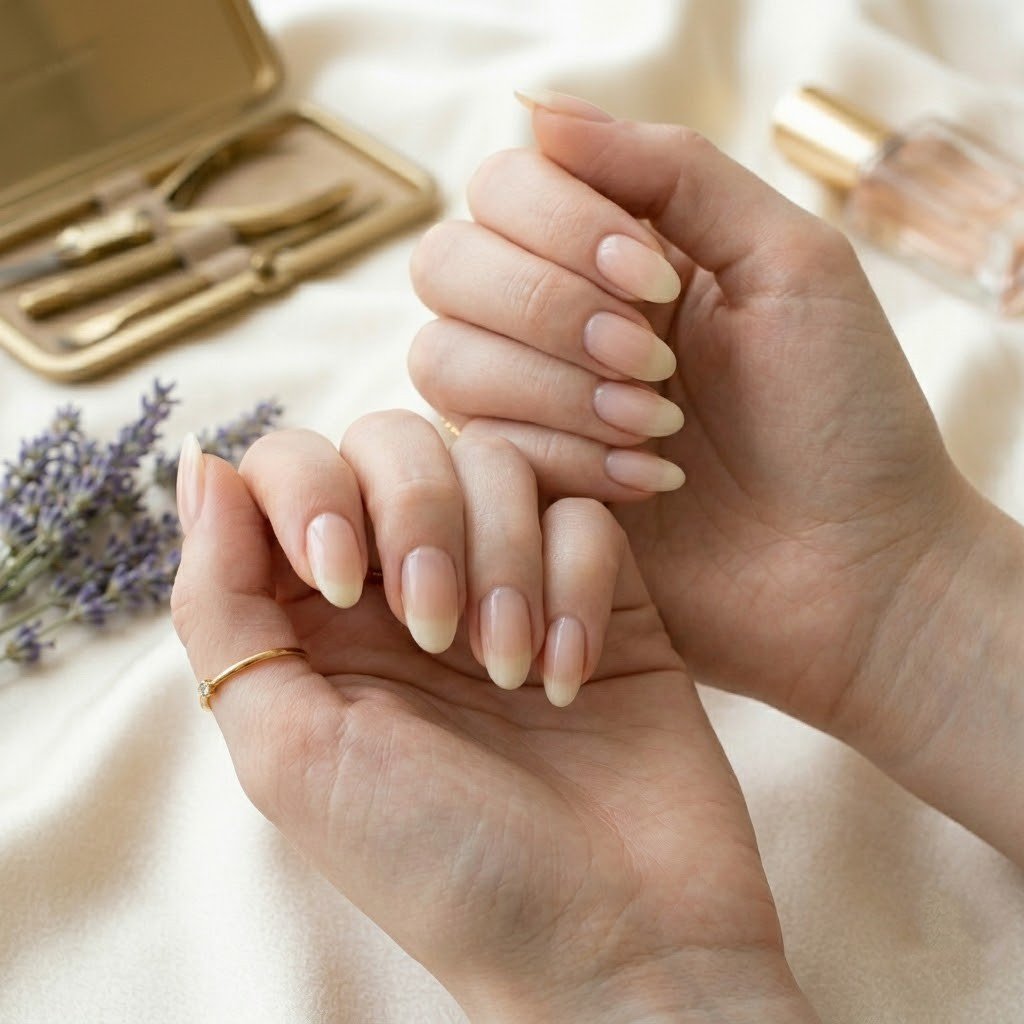
French tip nails have earned their staying power. They are not trendy in the way that makes them feel risky; they are classic in the way that makes them feel right almost every time you wear them. And now that the style has expanded well beyond the original white-on-nude formula, there is genuinely a version of the French tip that works for every preference, every nail shape, and every occasion.
The DIY learning curve is real but short. Your first attempt will teach you more than any tutorial can, but the process will feel entirely manageable by the third time.
When you are ready to think about maintaining the nails underneath those tips, here’s our guide to building a nail strengthening routine.
Frequently Asked Questions About French Tip Nails
What is a French manicure?
A French manicure is a nail style featuring a sheer pink or nude base with a white tip painted along the free edge of the nail. It was developed in the 1970s in Hollywood as versatile for a costume-neutral nail look and became one of the most popular salon styles in the world. Today, it encompasses a wide range of tip colors and styles beyond the original white.
What is an American manicure?
An American manicure is the softer and more natural cousin of the French manicure. It uses an off-white or cream tip rather than bright white, and a warmer nude base. The result looks more like an enhanced natural nail than a defined nail style. It tends to suit warmer skin tones particularly well.
How much are French tips at a salon?
A basic French tip manicure at a salon typically costs between $30 and $55, depending on salon location and whether you are getting a gel or acrylic finish. Gel French tips tend to sit at the higher end of that range. Press-on sets offer a genuinely good alternative at a fraction of the cost if budget is a consideration.
Can you do French tips on short nails?
Absolutely. Short nails are actually ideal for a micro French or a thin-line classic French tip. The tip line simply needs to be proportionally narrower to suit the shorter nail. Some of the cleanest French tip looks on social media right now are on short, neat nails rather than long extensions.
How long do French tip nails last?
A regular polish French tip manicure lasts five to seven days with normal wear before chipping begins. A gel French tip can last two to three weeks. Press-on French nails typically last five to seven days, depending on application quality and how much your hands are in water.