Now Reading: How to Dry Nails Fast: 12 Methods That Actually Work
-
01
How to Dry Nails Fast: 12 Methods That Actually Work
How to Dry Nails Fast: 12 Methods That Actually Work
How to Dry Nails Fast: 12 Proven Methods for a Smudge-Free Finish
Quick Answer: Stick to some easy things that actually work if you want to dry nail polish fast. Apply two thin coats instead of one thick one with a fast-drying top coat and try the cold water trick by submerging freshly painted nails in ice-cold water for about two minutes. A nail drying spray or cool air from a hair dryer also contributes to speeding things up significantly. Several methods cut your drying time from 20 minutes down to under 5.
You sat completely still for ten minutes after painting your nails, fresh but somehow still smudged them the second you reached for your phone, thinking nail paint is fully dry. This feels like the most frustrating thing about painting nails at home, and almost everyone faces this. You need to know that the problem usually isn’t the polish itself, but it’s the technique and the tools that you use, along with a few habits that quietly make it messier.
The good news is that learning how to dry nails fast doesn’t require any expensive equipment or a professional setup. This post will give you 12 practical methods, from application tricks to products that genuinely work, showing you exactly how to get nail polish to dry faster without the stressful waiting or the inevitable thumb smudge. Carefully read all twelve and apply the one you feel is easy to get your next home manicure done perfectly. A few of these will change how you paint your nails permanently.
In This Post
- How Long Does It Take for Nails to Dry?
- 12 Methods to Dry Nails Fast
- How Long to Wait Between Coats of Nail Polish
- Mistakes That Slow Your Nail Polish Down
- Frequently Asked Questions About Drying Nails Fast
How Long Does It Take for Nails to Dry?
It is worth understanding that “dry” and “fully cured” are not the same thing because confusion eventually leads to ruined manicures.
Regular nail polish feels dry to the touch in about 10 to 15 minutes under normal conditions, but that’s only a surface dry; the layers underneath are still soft. The deep layers of the nail plate coating are still soft and prone to smudging. Full hardening is when the polish has completely bonded and sticks to the nail plate without denting even under pressure, and it takes closer to one to two hours for a standard two-coat manicure.
Regular nail polish contains solvents that evaporate when exposed to air, and complete evaporation makes the colour set properly. Thick coats of nail paint trap solvent underneath, which slows the whole process dramatically by reducing the contact area of solvents with the surface. Atmospheric conditions, including temperature, humidity and air circulation, also affect how quickly that evaporation happens. In a hot and humid area, your polish will take twice as long to dry as it would in a cool and dry area.
Gel polish has a totally different working way, and it does not air dry at all like regular polish. It requires UV or LED light to cure by undergoing a chemical reaction, so attempting to air dry gel polish will surely leave it permanently tacky.
Why people say nail polish takes forever to dry is because they’re usually applying it too thickly and then waiting in the wrong conditions to dry, and then smudging by early estimate. These problems are usually overlooked while doing a manicure, so here are 12 methods to fix all of that.
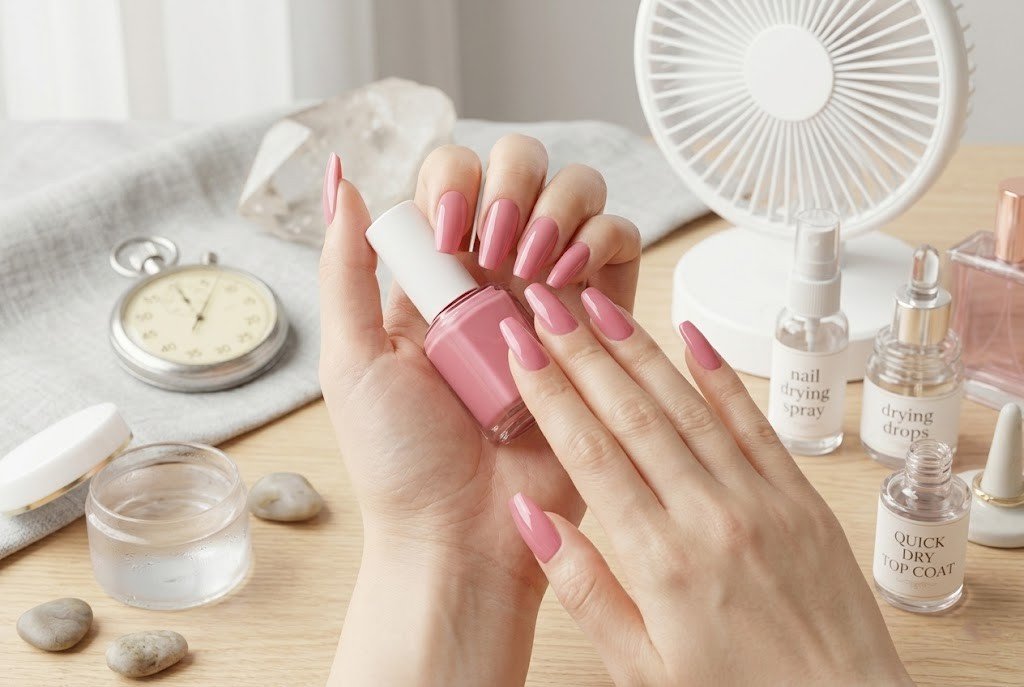
12 Methods to Dry Nails Fast
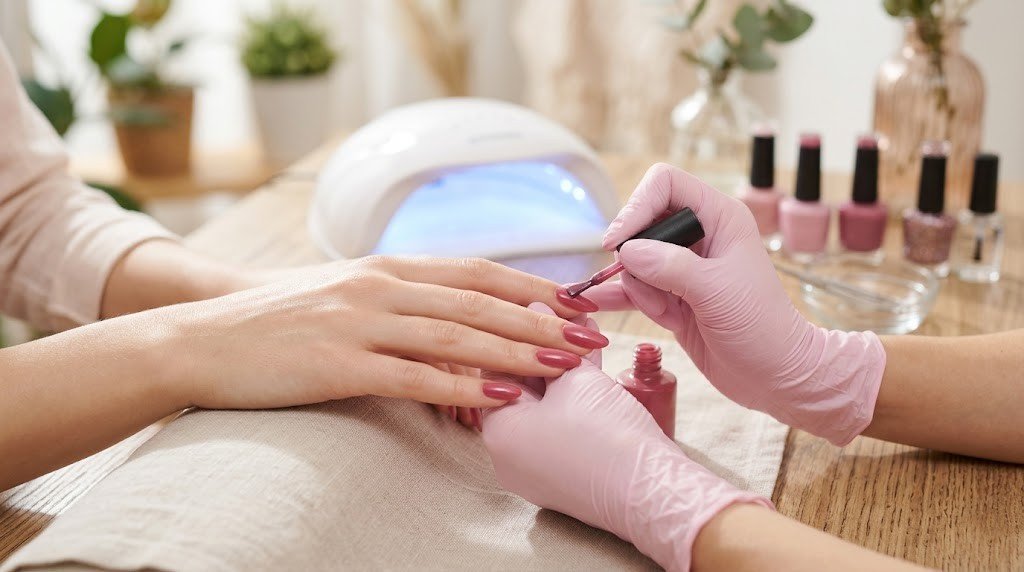
1. Apply Thin Coats from Start
The single most effective thing that costs nothing is applying thin coats because thick coats trap solvent inside, which makes the surface dry while the polish underneath stays soft for hours. Each coat applied should be barely opaque, as two thin coats dry significantly faster than one thick one. If you can see streaks in the first layer applied, that’s fine, and they will be covered by the second coat.
2. Use a Fast-Drying Top Coat
A quality fast-drying top coat like Seche Vite or OPI RapiDry is a two-in-one product that seals your colour and also pulls solvents out from the layers below that directly accelerate the drying process. Apply a thin layer of it as the final step before your colour coat is still slightly tacky. This is probably the easiest and fastest upgrade that can be made for a perfect home manicure.
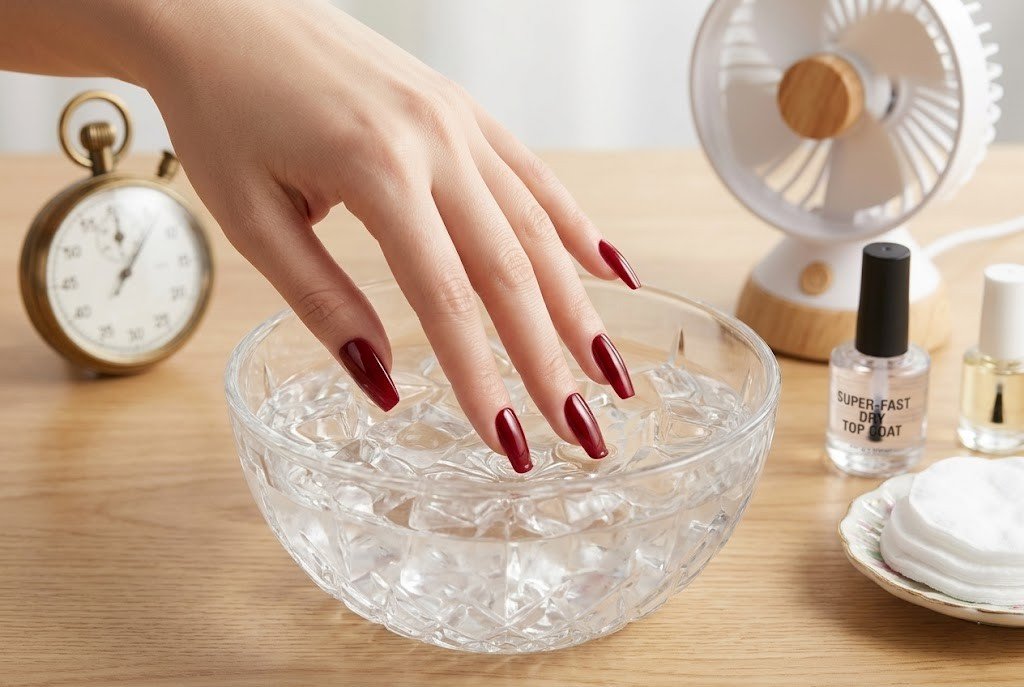
3. Try the Cold Water Trick
Fill a bowl with cold water and a few ice cubes, and dip your painted nails in it for two minutes until the surface is set slightly, then submerge your fingers for two more minutes, before patting dry a trick dermatology and beauty writers alike point to as genuinely useful, with the caveat that it hardens the surface rather than fully drying the layers underneath. The cold temperature causes the polish to contract and harden quickly. Seeing water beading after pulling your hands out is actually a good sign, meaning the method actually worked.
4. Use a Nail Drying Spray or Drops
After fresh paint, directly apply nail-drying sprays and cuticle oils formulated with quick-dry ingredients on that wet polish. They penetrate the top layer and push solvents out faster, which will eventually accelerate the drying process. OPI Drip Dry drops and Essie Quick-E are the most popular options in nail drying sprays, and only a few drops of them go a long way. Do not apply them immediately, but give the surface 60 seconds to start setting first so the drops work more effectively.
5. Blow Cool Air with a Hair Dryer
Heat is the enemy of wet nail polish because it softens lacquer rather than hardening it, but cool air has a different story. Apply a cool short setting to your hair dryer and then hold it about 30 centimetres away from your freshly painted nails. Don’t hold it too close so the airflow will accelerate solvent evaporation without introducing heat that softens the polish. Two to three minutes of this cool airflow will knock significant time off your drying process.
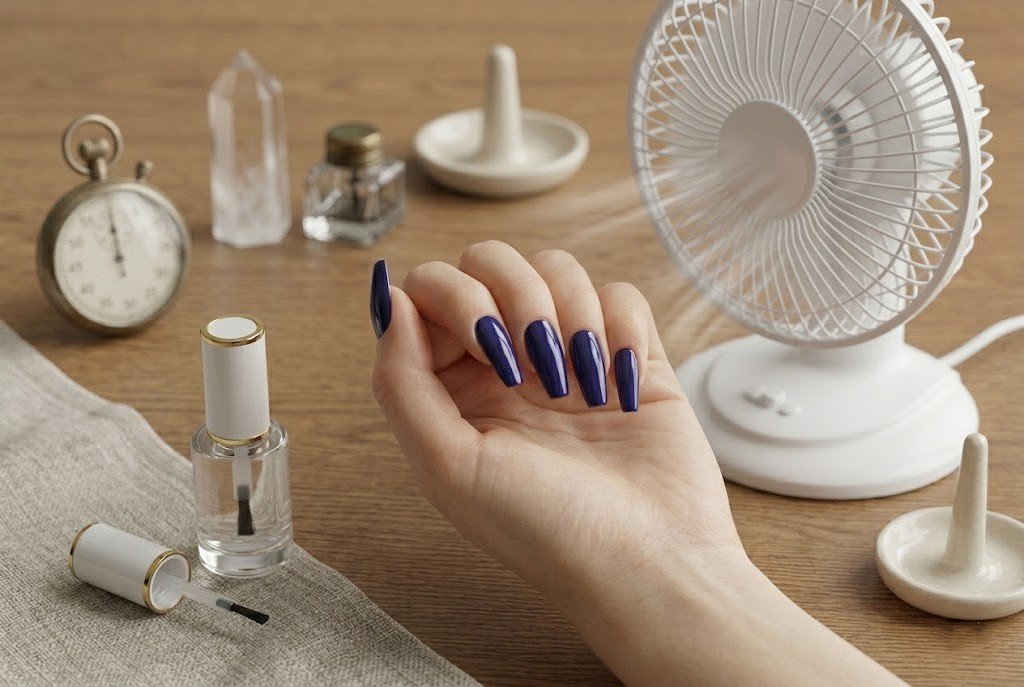
6. Use a UV or LED Lamp
Standard nail lamps are designed for gel polish, but some regular polishes also respond to UV or LED exposure by drying noticeably faster under them. Results vary by formula of nail paint, meaning this isn’t foolproof for all regular polishes. If you already own a nail lamp, then it’s worth trying because it may fast dry time. Just two minutes under LED light can dramatically speed up surface drying on many standard lacquers.
7. Wait the Right Amount of Time Between Coats
One of the most common mistakes that makes nail paint take forever to dry is rushing the second coat onto a still-wet first coat, which also causes smudging so easily. Wait at least two minutes after applying one coat, then put on a second one. Rushing this step means essentially trapping wet polish under more wet polish, which makes a long wait useless, so be patient.
8. Keep Your Polish in the Fridge for 15 Minutes Before Use
Cold polish might sound counterproductive because it is thicker in consistency, but it’s not actually true because slightly chilled polish is more helpful in applying thin coats more evenly, and the solvents evaporate faster once on the nail with a larger surface to dry. Placing the bottle in the fridge for about 15 minutes before your manicure is a small but real trick, but don’t freeze it.
9. Choose a Quick-Dry Formula
Some polishes have formulas that are specifically formulated to dry faster than standard lacquers. Certain brands like Essie Speed Setter or Sally Hansen Insta-Dri use modified resin systems in their products that set more quickly. If drying time is always a frustration for you, then switching your everyday polish to a quick-dry formula is the most practical long-term fix. Using a quick-dry formula won’t need any extra steps because the speed is built in.
10. Dry in a Cool, Low-Humidity Room
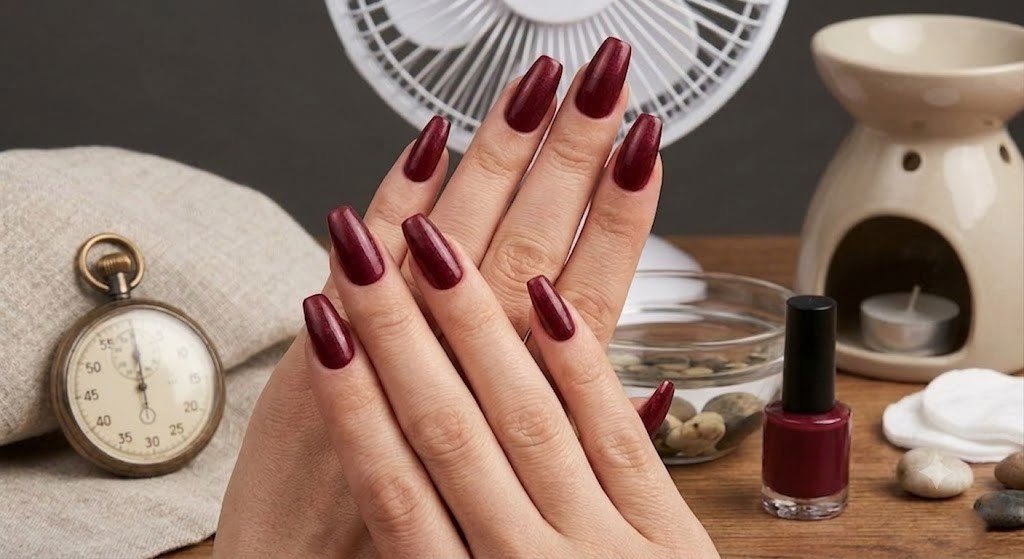
Solvent evaporation slows significantly in warm and humid conditions, so if you usually paint your nails in a steamy bathroom right after a shower, then you’re working against yourself. Painting your nails in a cool room with good air circulation, with a light fan on low nearby, isn’t a bad idea. This sounds simple, but the environment genuinely affects how quickly nail polish sets.
11. Use Cooking Oil or Baby Oil
Applying a drop of olive oil, coconut oil or even any plain baby oil over freshly painted nails can help soften the surface tension and allow the top layers to harden. It won’t work dramatically in a faster drying process as a drying spray, but it does work gently by conditioning the skin around your nail fold and cuticle at the same time. Do not apply it immediately after applying nail paint; instead, apply after about 90 seconds.
12. Don’t Shake the Bottle
Shaking a nail polish bottle before applying introduces air bubbles into the formula that end up in your applied coat and create a slightly uneven texture that is more prone to smudging. Roll the bottle between your palms instead of shaking because it mixes the formula just as well without the bubbles. This two-second habit change makes a noticeable difference in a well-done home manicure.
How Long to Wait Between Coats of Nail Polish
The fastest way to dry nail polish overall is to give each layer a good waiting time because skipping this step undoes every other method on this list.
Wait one to two minutes after your base coat before applying colour is a genuine tip. Wait two minutes after applying the base coat and between your first and second colour coats, then wait another two minutes before applying your top coat. In total, it is roughly six to eight minutes of intentional waiting across the whole process, but it cuts your total drying time dramatically by giving each layer proper setting time before the next one goes on.
If there are humid summer conditions, then add an extra minute between each coat, but in a cool and dry room, the lower end of those times is usually enough. The key thing is that none of the coats should feel but just barely tacky before the next one goes on.
Mistakes That Slow Your Nail Polish Down
Learning how to make nails dry faster is only enough if you don’t stop the habits that quietly extend your drying time without you realising it.
- Applying one thick coat instead of two thin ones. Thick coats trap solvent underneath a surface skin and make it dry on top while remaining dangerously soft below for hours.
- Painting nails right after a shower or washing hands. Don’t apply nail paint just after exposure to water because warm and moist nail plates are the worst surface for polish adhesion and drying.
- Skipping the base coat. A base coat does not just protect but also creates a smoother surface for colour to bond to, which means more even application with thinner coats and faster drying overall.
- Using a top coat that’s too thick or old. Old Top coats thicken as they age, no longer providing the quick-dry benefit that they’re supposed to. If your top coat seems gloopy, then it’s time to replace it with a new one. A quick trick of adding two drops of nail polish thinner, not remover, will extend its life slightly.
- Touching, tapping, or testing too soon. The main cause of fingerprint dents on nail polish is pressing a fingertip to your nail to check if it is dry when it is actually not. If you have to check, then lightly brush the side of one nail against another, and if you feel resistance means it needs more time.
Frequently Asked Questions About Drying Nails Fast
Why won’t my nail polish dry?
The most common reasons nail polish won’t dry properly are thick coats, high humidity or a formula that has thickened with age. Applying coats that are too heavy traps solvent inside the layers, leaving the polish soft for hours. Try switching to two thin coats, painting in a cooler and drier environment and replacing any polish that has thickened significantly in the bottle.
Does UV light dry regular nail polish?
UV and LED lamps are designed specifically for gel polish formulas, which cure through a chemical reaction rather than evaporation. Most regular nail polishes don’t cure under UV light the same way, though some standard lacquers do dry noticeably faster under LED exposure. If you own a nail lamp, then it’s worth testing on your regular polish, but don’t rely on it as a guaranteed method.
How to dry gel nail polish without UV light?
Gel polish requires UV or LED light to cure; there is no true substitute. Without proper lamp curing, gel polish will remain soft and tacky regardless of how long you wait. If you don’t have a lamp and want faster drying, then regular nail polish with a fast-drying top coat is a better option for at-home manicures. Gel formulas are simply not designed to air dry.
How long does gel nail polish take to dry?
Gel nail polish doesn’t dry; it cures. Under an LED lamp, most gel polishes cure fully in 30 to 60 seconds per coat. Curing takes two to three minutes per coat under a UV lamp. Once cured, the gel polish is immediately hard and smudge-proof, which is one of its biggest advantages over regular lacquer.
How long to wait between nail polish coats?
Wait one to two minutes after your base coat, two minutes between colour coats and two minutes before applying your top coat. In humid conditions, add an extra minute to each wait. Rushing between coats is one of the main reasons polish stays soft and dents easily, as each layer needs a moment to begin setting before the next one is applied.
Drying your nails fast isn’t about luck or waiting long enough, but just about working with the polish instead of against it. Applying thin coats of the right products and a cool, dry environment genuinely does more than any single trick ever could. Pick two or three methods from this list and add them to your routine for every next manicure, and you’ll be surprised how much faster the whole process becomes when the fundamentals are right.
If you’re putting this much care into how your polish dries, it’s worth making sure the rest of your manicure routine is just as strong. Here’s our natural nail care routine guide to round it out.